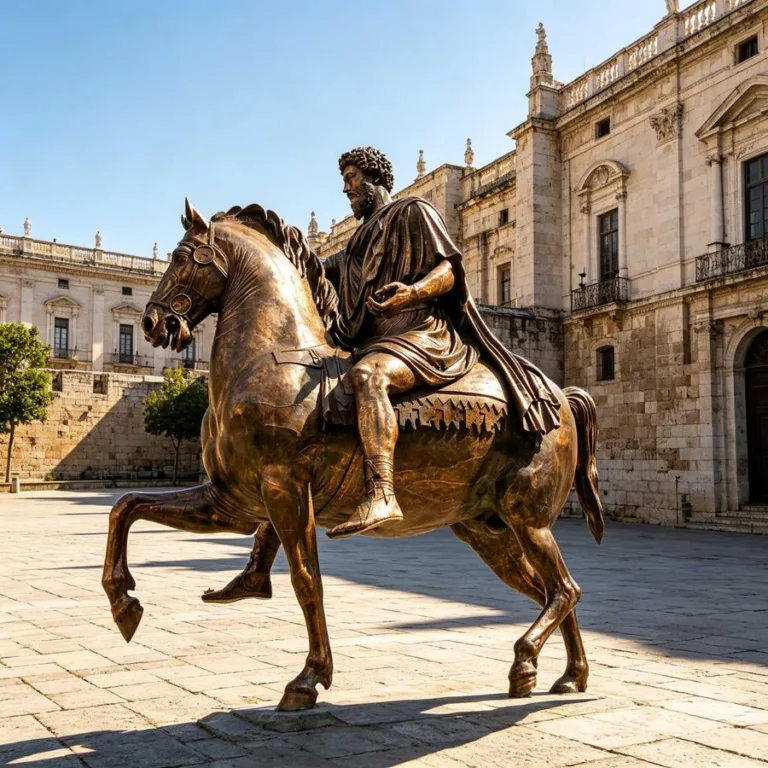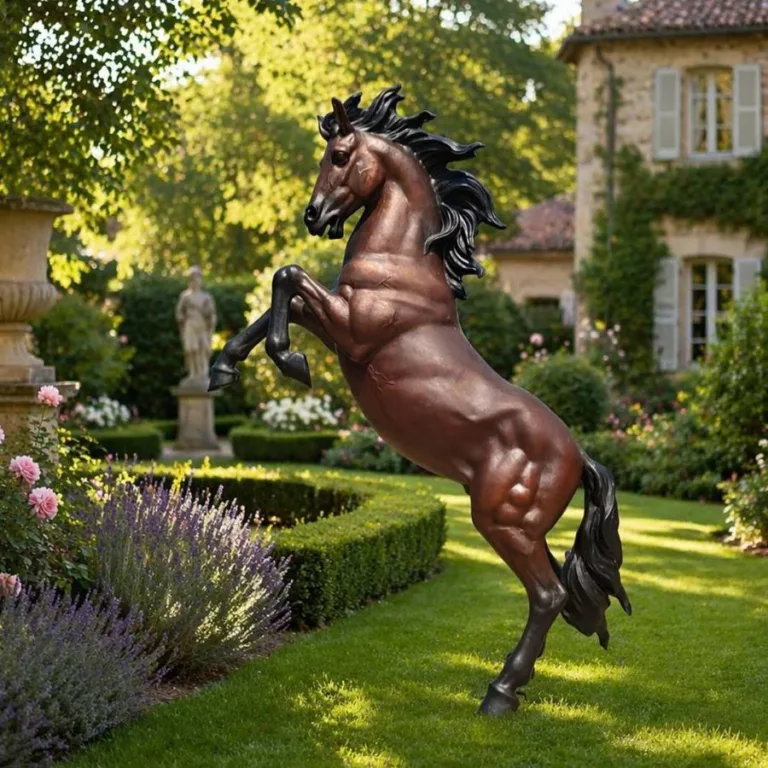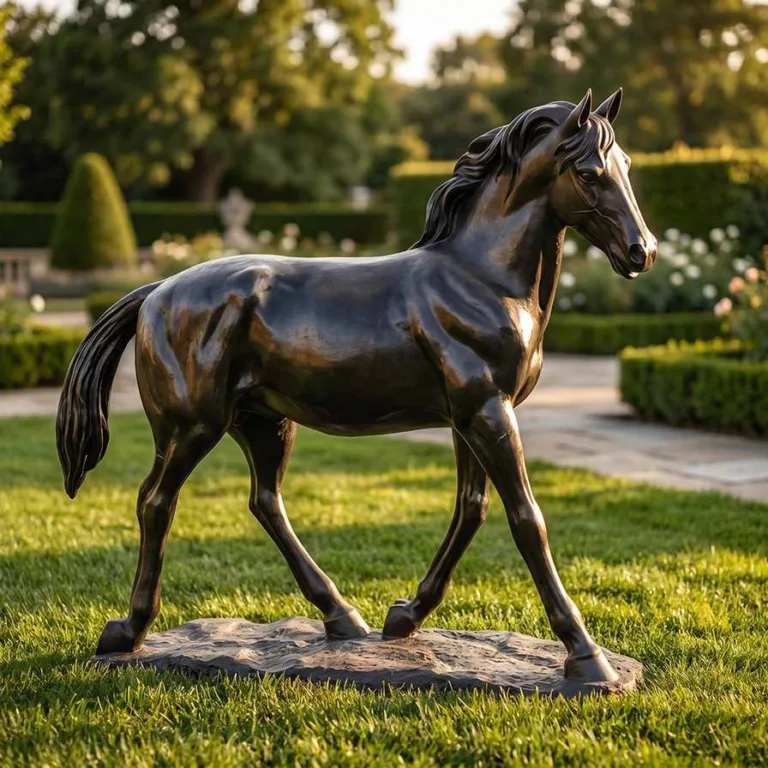

How long does a sculpture last outdoors? For bronze the published answer is 50 to 100 years. For marble, 10 to 30. For stainless steel, no comparable figure really exists. For resin, three to five years fully exposed.
Those numbers come from credible sources, and they disagree — with each other, and sometimes with themselves. That is not a failure of the sources. It is a problem with the question.
We have cast bronze in Quyang, Hebei — a city the Chinese government recognizes as the nation’s sculpture production hub — for more than forty years. This is what actually decides how long a horse statue lasts outdoors, and why the figures you find will keep disagreeing.
Why “How Long Does a Sculpture Last Outdoors?” Has Five Different Answers
Nearly every published figure answers a slightly different question. Here are the ones you meet most often, and what each appears to be measuring.
| Published figure | Material | What it appears to be measuring |
|---|---|---|
| 50–100 years | Bronze | Service life under a maintenance regime |
| 100+ years, and in some guides 200+ | Bronze | Survival of the bronze itself |
| 10–30 years, and in some guides up to 40 | Marble | Climate-dependent outdoor life |
| 2–3 years, then 5–8; or 3–5 to full replacement | Resin | Surface degradation first, then failure |
| No comparable figure published | Stainless steel | — |
These ranges come from foundries’ own published maintenance schedules and from outdoor-bronze conservation guidance. Not one of them states which clock it is reading.
Sort them this way and most of the disagreement dissolves. A figure in the tens of years is usually measuring how long the surface keeps the appearance it was sold with, under some assumed maintenance regime. A figure in the hundreds is usually measuring how long the material itself survives, with the surface allowed to weather however it likes.
Both are true. They are simply not answers to the same question — and no source states which clock it is reading, which is why the numbers appear to fight.
Six variables move the answer:
- What counts as the end. Surface appearance and structural integrity are two different clocks, and they can be a century apart.
- Climate. Freeze-thaw cycles, salt air, and UV intensity each attack a different material first.
- How the piece was made. Wall thickness, whether an internal steel armature carries the load, and whether the patina was sealed after coloring — all three set during how a bronze horse statue is made.
- Scale. Figures established on small pieces do not transfer to life size.
- Whether anyone maintains it. The single largest variable, and the one most often left out.
- What it stands on. A failing foundation ends a statue’s outdoor life faster than its material does.
Only two of those six — climate and maintenance — sit outside the foundry’s control at the moment you buy. The rest are decided in the workshop, and they are the part buyers almost never ask about.
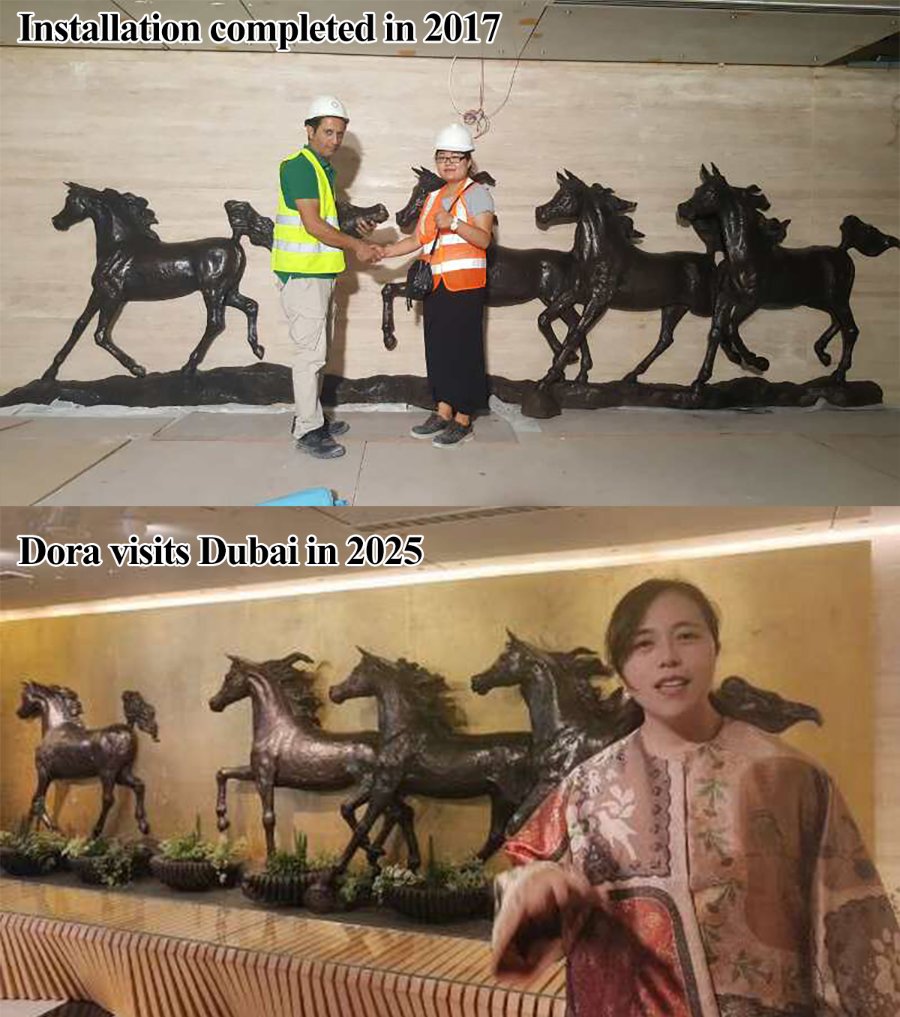
How Long Each Material Lasts Outdoors
| Material | Published outdoor life | What ends it first | Repairable? | Where it is the right answer |
|---|---|---|---|---|
| Silicon bronze | 50–100 years under maintenance; the metal itself far longer | Surface appearance, then fixings | Yes — welded, recolored, resealed | Life size and above, where detail and permanence both matter |
| Marble | 10–30 years in a hard climate, longer in a mild one | Freeze-thaw and acid rain | Effectively no | Architectural mass in a mild, sheltered setting |
| Stainless steel | No comparable published figure | Surface, not structure | Welding yes; color match no | Modern and coastal work, where the form is simple |
| Resin / fiberglass | 3–5 years fully exposed | UV, then the substrate beneath it | Patched, visibly | Sheltered, seasonal, or temporary settings |
Bronze. The 50–100 year figure describes a maintained piece: cleaned every three to six months, waxed every six to twelve, coating renewed every five to ten, professionally restored every twenty to thirty. That is a schedule, not a limit. Unmaintained bronze does not fall apart — it changes, and the change is called patina. The reason bronze dominates outdoor figurative work is not that it resists time, but that time makes it look better rather than worse.
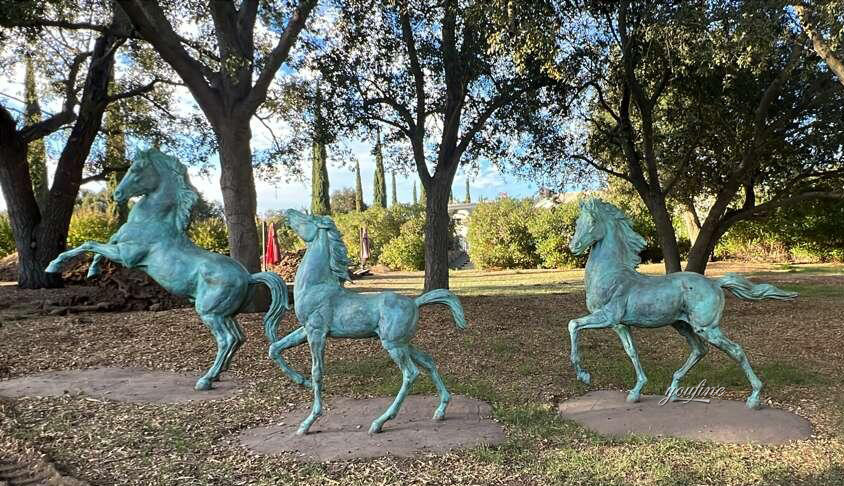
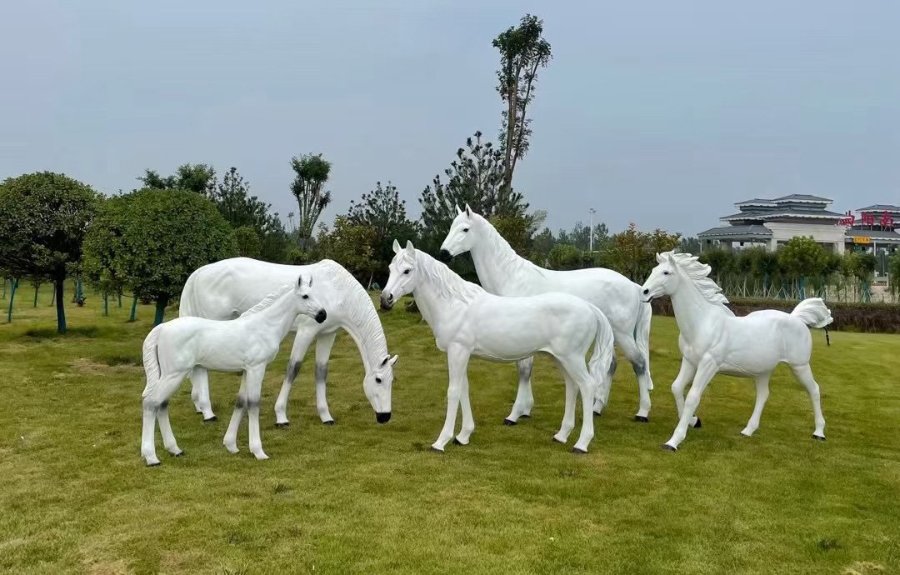
Marble. Asked what is marble versus bronze sculpture, most guides answer on appearance. The more useful distinction is on reversibility. Marble is a carved solid; bronze is a cast shell that can be welded. Stone outdoors loses material at the surface with every freeze-thaw cycle, and the loss cannot be put back. In a mild, sheltered climate marble will outlast its owner. In a climate with hard winters, its published range is the shortest of any stone here. Where stone does belong outdoors is as a plinth rather than a figure — as on these bronze horse sculptures with a marble base.
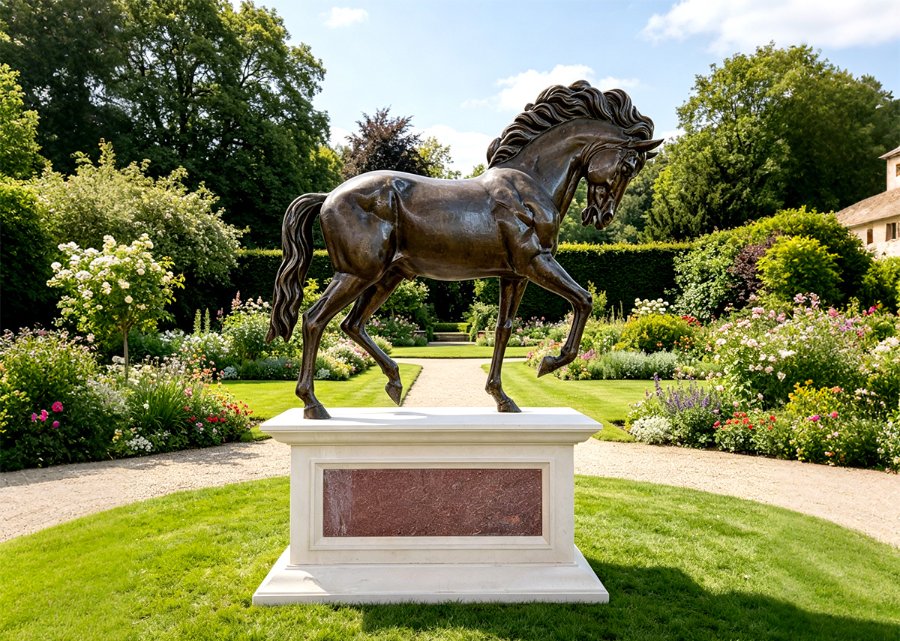
Stainless steel. It is the odd entry, because there is no widely published outdoor service-life figure for it as sculpture — a fact worth pausing on. Stainless does not fail the way bronze or marble fails. It pits, stains, and discolors, usually at welds and in coastal air, while the structure underneath remains sound. That makes it excellent for simple, large, modern forms and awkward for a horse, where the whole subject is surface modeling.
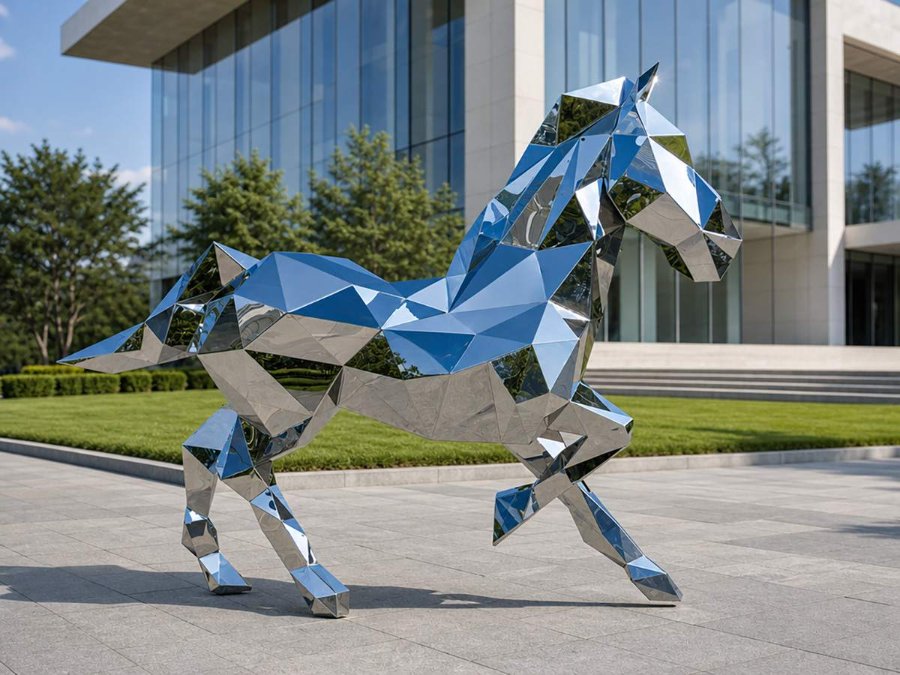
Resin and fiberglass. The best figures available are 2–3 years before visible UV degradation and 5–8 years before it is pronounced, with 3–5 years given as the full-exposure point. Resin is light, accepts fine detail, costs the least, and is the right answer in a sheltered courtyard or a temporary display. The published numbers are also the only ones in this table that describe a piece reaching the end of its life rather than entering a maintenance cycle.
What Can Still Be Repaired Ten Years In
A question that separates these materials more sharply than any lifespan figure: after the first accident, what actually happens?
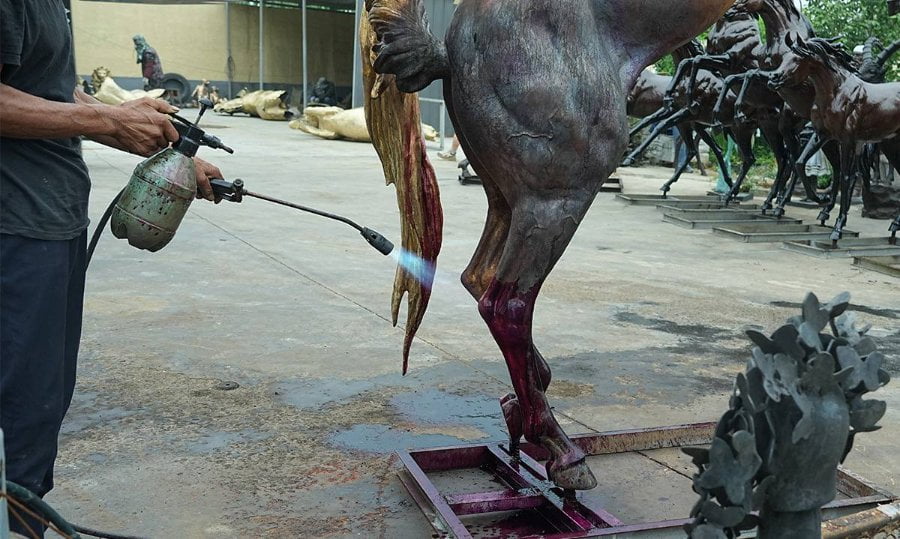
Bronze. A cracked leg is welded, the patina is recolored to match, and the piece goes back out. A bronze horse at twenty years old is not near the end of anything — it is a candidate for its first professional restoration, which the published schedule places at twenty to thirty years.
Stainless steel. Welding is straightforward. Matching the finish over the weld is not: the heat-affected zone takes a different sheen, and on the visible surface of a horse that difference reads as damage.
Marble. A chip is permanent. A crack is a structural problem rather than a cosmetic one, and stone cannot be welded. In practice, putting marble outdoors is a decision to accept whatever happens to it.
Resin. Repair is possible and it shows. A patch applied to a five-year-old resin piece is also being bonded to a surface already partway through its own degradation, so the repair ages at a different rate than everything around it.
So the practical version of the question is not which material lasts longest, but what this piece looks like after its first accident. That answer is visible in a workshop long before you order.
Buying Once vs Buying Again: What Twenty Years Actually Adds Up To
Lifespan figures become useful when you count events instead of years. Over a twenty-year window, using the published figures above, the four materials produce this:
| Over twenty years | Bronze | Marble | Stainless steel | Resin |
|---|---|---|---|---|
| Scheduled surface care | 40–80 cleans, 20–40 waxes | Regular cleaning | Minimal | Repainting as it fades |
| Protective renewal | 2–4 coating touch-ups | — | — | — |
| Professional restoration | 0–1 | — | — | — |
| Full replacement | 0 | 0, in a suitable climate | 0 | 4–7 |
The arithmetic behind that last row is not subtle. At three to five years of full exposure, a resin piece is bought four to seven times in the same window in which bronze is bought once. Twenty divided by five is four; twenty divided by three is just under seven.
The same arithmetic also cuts against bronze in one place, and it is the place buyers least expect. The largest line in this table is not the material — it is whether anyone performs the maintenance. A bronze horse that is never cleaned or waxed will not necessarily outlast a marble horse that is. The schedule above is what the 50–100 year figure assumes, and it is a commitment rather than a property of the metal.
Why Scale Changes the Answer at Life Size and Above
Almost every published lifespan figure was established on pieces you can lift, or on architectural metalwork of modest section. None of them transfer cleanly upward.
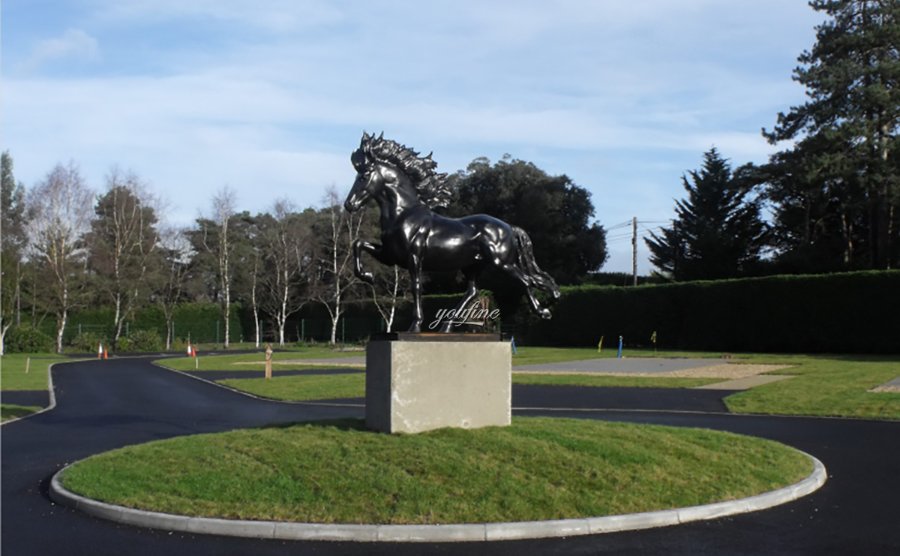
Wind load scales with surface area; mass scales with volume. As a piece grows, the wind arrives faster than the weight does — and a horse standing on two legs is a cantilever with very little footprint to resist it. This is why an internal steel armature, rather than the bronze’s own thickness, is what carries a large piece, and why the armature’s connection into the base decides more about its outdoor life than the alloy does.
Each material has a scale above which its published figure stops applying.
- Resin loses its figure first. A large hollow form has to be built in sections that are then joined, and the joins become the failure points; the UV-exposed surface also grows faster than the mass does. A three-to-five-year figure measured on a small piece tells you nothing useful about a life size horse.
- Stainless steel holds structurally at scale, but shows every join.
- Marble gains wind resistance from its own mass and loses tolerance for it: a large stone horse is difficult to move, difficult to install, and impossible to repair.
- Bronze is the one material whose published figure is generally taken from large architectural and monumental work in the first place.
That last point is why we work where we do: at life size and above. If scale and pose are still open decisions, our guide to choosing a bronze horse statue for a garden takes those two in order.
Why Bronze Horse Foundry
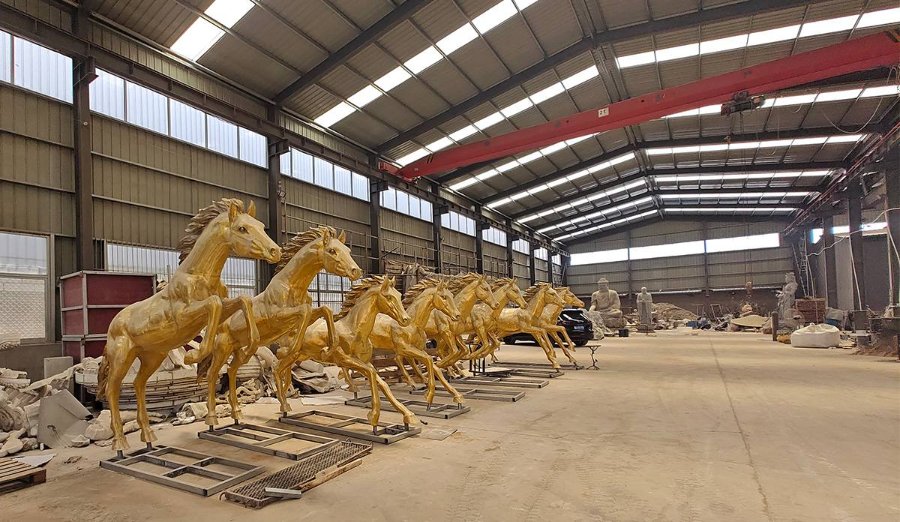
Bronze Horse Sculpture Foundry has been a bronze horse manufacturer in China for more than forty years, casting in Quyang.
- 100% silica sol investment casting, for a higher surface finish and sharper thin-wall detail.
- An internal steel armature as standard on every piece.
- More than 500 bronze horse models — rearing, standing, racing, walking, grazing — plus fully custom work from clay modeling.
- Sizes from life size to monumental.
- Full-chain capability under one roof: clay modeling, mold making, casting, welding, polishing, patina, export-grade crating, worldwide freight coordination.
- Delivered to more than 30 countries, including the USA, UK, Germany, Australia, Canada, and the UAE.
If you are planning a custom bronze horse statue, the modeling stage is where your decisions are still inexpensive to change. Send us your climate, the installation point, and how long you intend to hold the piece — wall thickness, armature, and patina sealing all follow from those three answers.
How Long Does a Sculpture Last Outdoors? Five Questions
These five come up most often at the quoting stage; the rest are on our frequently asked questions page.
How long does a bronze horse statue last outdoors? 50 to 100 years under a basic care schedule, and the metal itself considerably longer: bronze horse statues from antiquity are still standing.
Does bronze rust? No. Bronze is copper and tin. Its surface oxidizes into patina, which protects the metal rather than consuming it, and the changes that do occur are cosmetic and reversible.
Can a marble horse statue stay outdoors? In a mild, sheltered climate, yes, for decades. Where winters are hard, freeze-thaw cycling removes stone from the surface every year, and none of it can be replaced.
How long does a resin horse statue last outdoors? Three to five years fully exposed. Sheltered it lasts longer; at life size the joins between sections become the limiting factor before the material does.
How long does a horse statue last compared with other sculpture materials? A horse is harder on its material than a seated or standing figure: fewer contact points with the ground and more unsupported mass. Bronze handles that geometry, and it is also the material with the longest realistic outdoor life.
Conclusion
The question “how long does a sculpture last outdoors” has no single answer, because the published figures are measuring different things — a surface, a structure, or a maintenance regime. Only three of the variables are yours to choose, and they are climate, scale, and whether you will keep to a schedule.
Bronze is the material we cast, so treat the rest as the honest case against us. Marble is the better answer in a mild climate where architectural mass matters. Stainless steel is the better answer for simple, large, modern form near the coast. Resin is the right answer wherever the piece is sheltered or temporary. What bronze does better than any of them is stay repairable — and repairability is the property that decides whether a horse is still outdoors in its thirtieth year.
If you have your climate, your installation point, and a target lifespan, send them to us. We will tell you which of the four materials we would choose, including when the answer is not bronze.