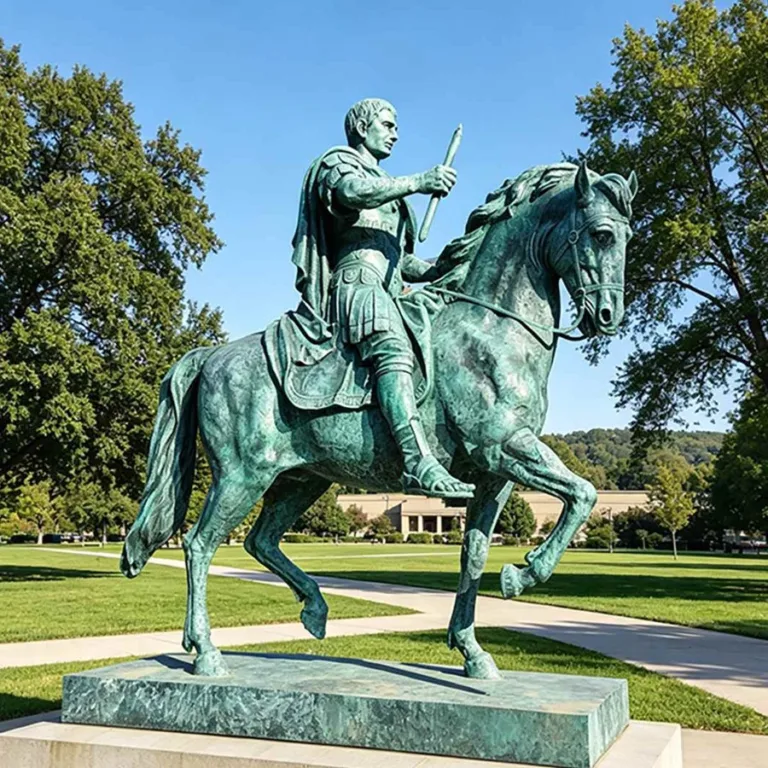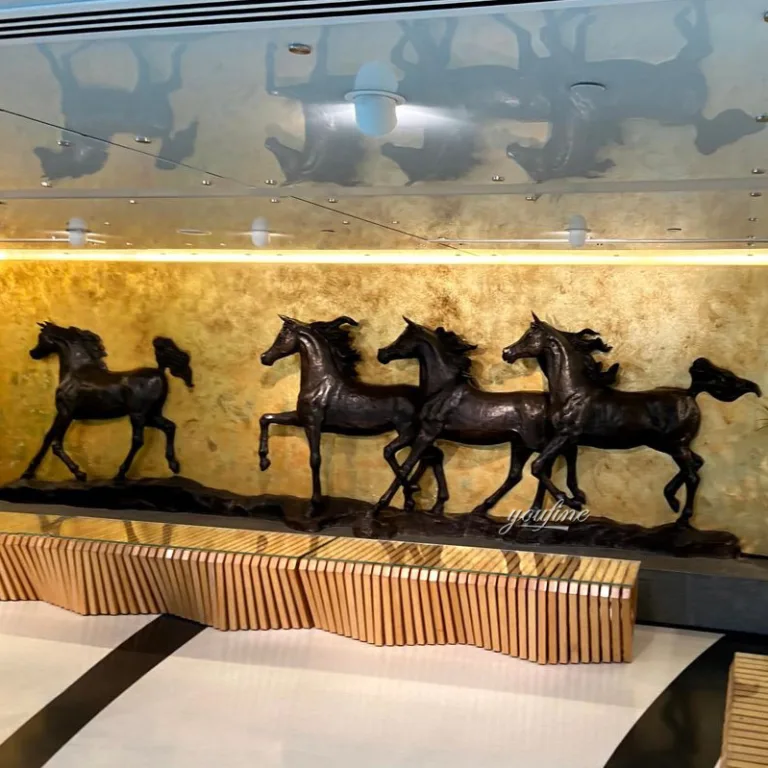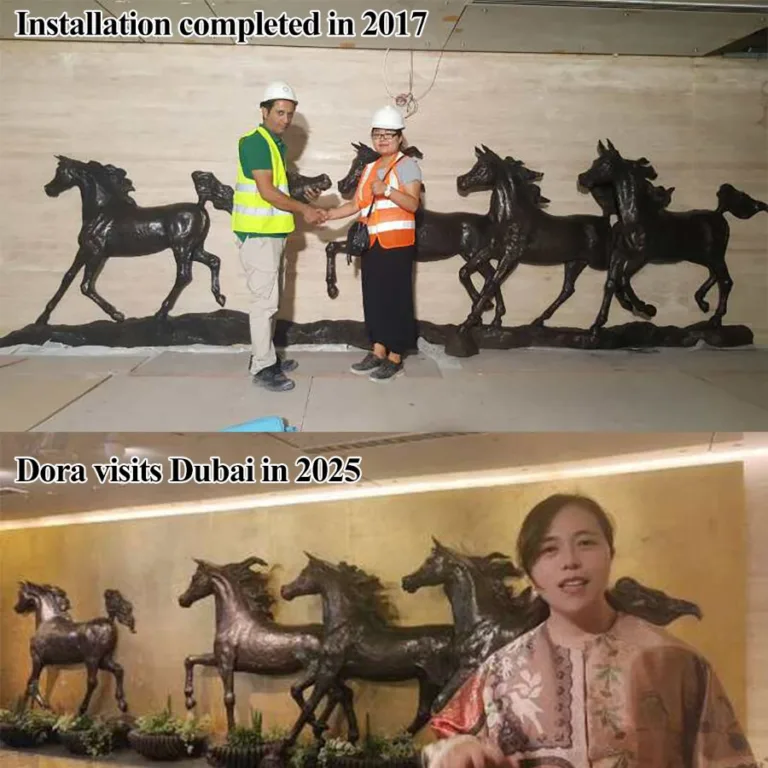

Planning an outdoor bronze horse installation starts with the site, the statue’s mounting details, and the route from delivery to final placement. Confirm these before foundation work begins, then coordinate the delivery and installation schedule with the foundry and your local team.
A life-size horse on a garden lawn, a rearing horse at an estate entrance, and a group of horses in a public plaza each present different requirements. This guide explains what to prepare, which details to request from the foundry, and what your local contractor should confirm before the sculpture arrives.
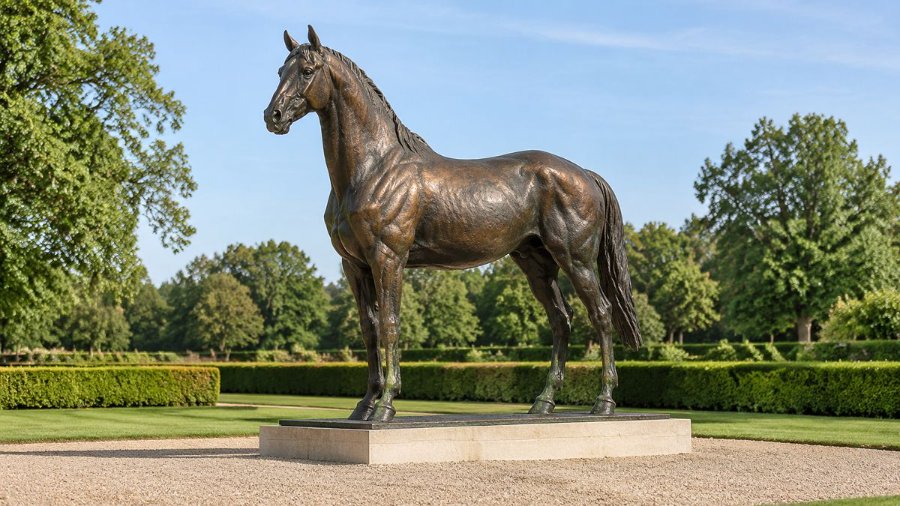
1. Choose the Right Location for Your Bronze Horse Statue
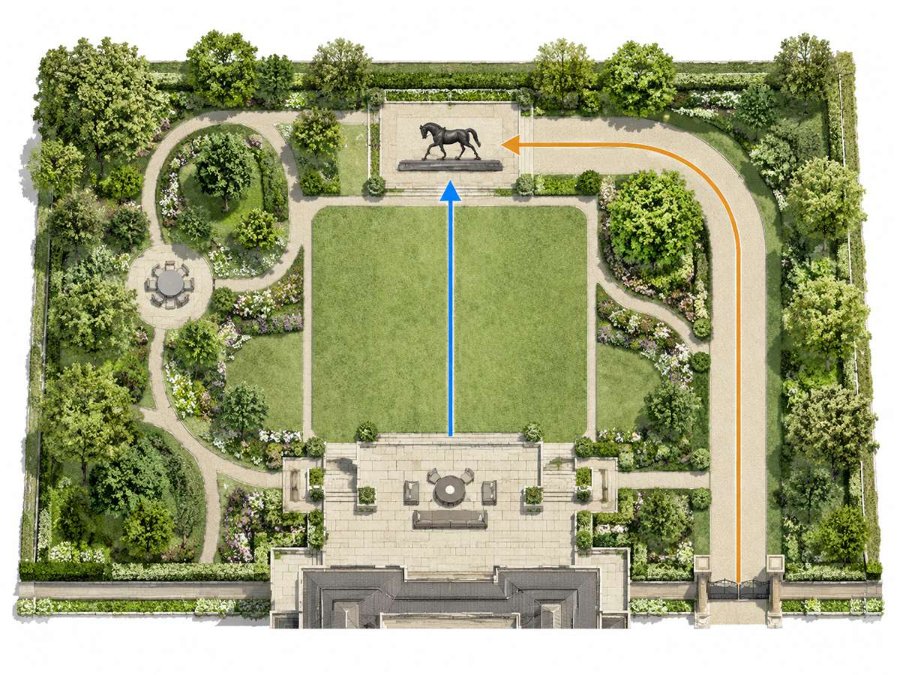
Start with the main viewing position. Will people see the horse from an entrance, driveway, terrace, or garden path? Consider whether the sculpture should face approaching visitors, follow the direction of a driveway, or turn toward a building or landscape feature.
Confirm the orientation before the base and mounting layout are finalized. A change in direction can affect how the sculpture connects to a pedestal and how installation equipment approaches it.
Measure the surrounding space as well as the area beneath the horse. Allow room for the sculpture’s full silhouette, nearby planting, pedestrian movement, and future maintenance access. If you are still deciding on proportions, our guide to choosing a bronze horse statue for a garden explains how scale and pose work together.
Record the existing ground conditions, including lawn, paving, slopes, or an architectural pedestal. Check whether water collects near the proposed position. An existing paved surface or stone base may need inspection before the local team can confirm whether it can support the intended installation.
Photograph the location from several directions. Include the main viewing angle, nearby walls and trees, and the route leading to the installation area. A simple sketch with measurements helps everyone work from the same site information.
2. Confirm the Statue’s Size, Weight, and Mounting Details
Before foundation or pedestal construction begins, request the information needed to coordinate the sculpture with the site.
The project team should have:
- Overall height, length, and width.
- Sculpture weight and packed shipping weight.
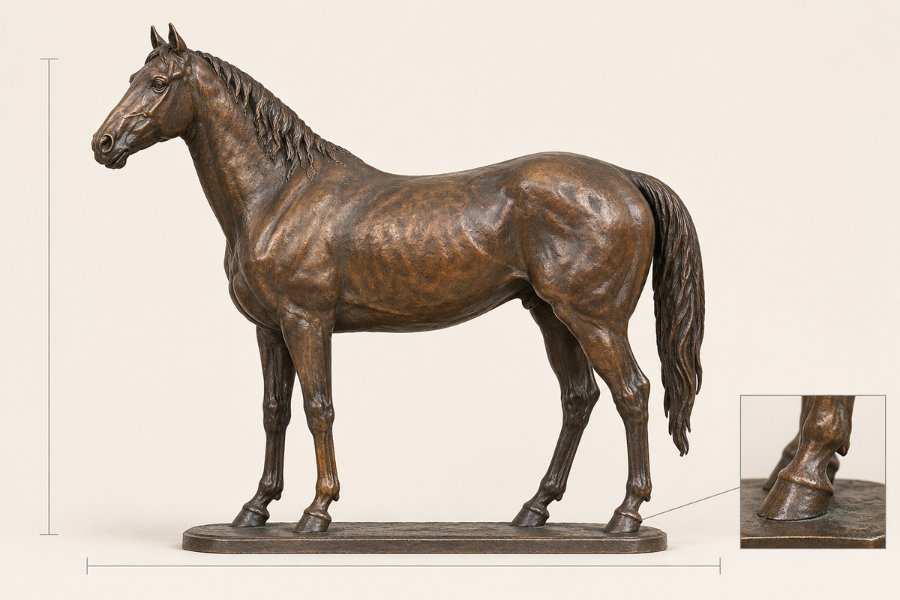
- Bottom dimensions and support locations.
- Mounting-point positions and relevant connection details.
- Handling information for the specific sculpture.
Use estimated weights for early planning, then obtain confirmed sculpture and packed shipping weights before the local team finalizes unloading and lifting arrangements.
Bronze horse statues can have different support arrangements. Depending on the design, the lower section may include hoof connections, a base plate, or other structural connections. Use the approved information for the actual sculpture.
Pose matters too. A standing horse, walking horse, and rearing horse have different support layouts. Each requires a mounting arrangement confirmed for that sculpture and site. The relationship between the sculpture’s internal structure, its connections, and the foundation should be resolved during project planning.
If the size, pose, base, or orientation changes, circulate the updated drawing before related site work continues. Give one person responsibility for keeping the current approved documents available to the foundry and installation team.
3. Prepare the Foundation and Pedestal Before Delivery
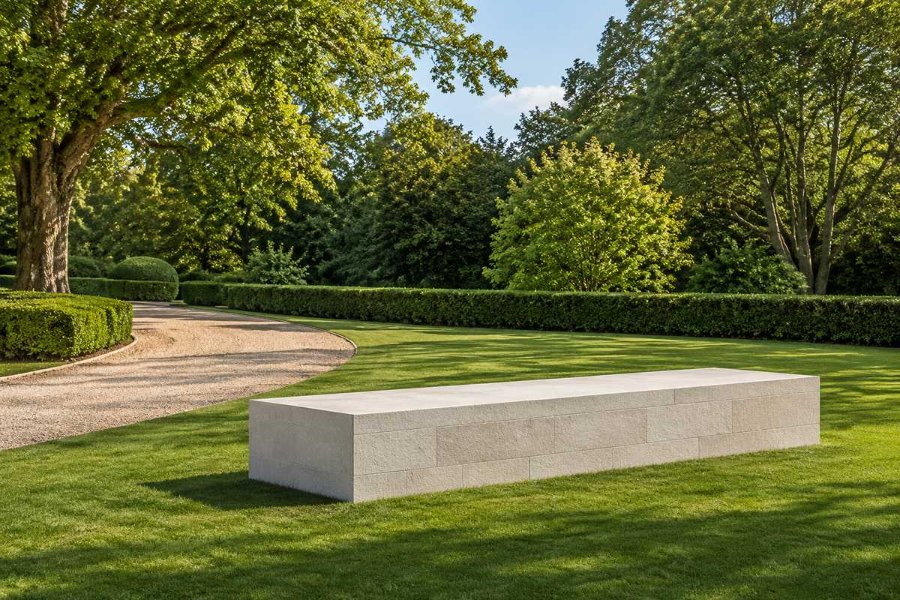
The foundation transfers loads to the ground. A pedestal raises and presents the sculpture and may also form part of its structural support. The foundation, pedestal, and statue connections should be coordinated as one installation system.
For a lawn installation, the local team should confirm the foundation location, drainage, and how the finished ground will meet the sculpture or pedestal. Discuss how the surrounding lawn or planting will be restored after installation.
For stone or concrete paving, the team should check the structure beneath the visible surface. The installation may require opening and reinstating part of the paving, depending on the approved foundation and fixing arrangement.
For an existing pedestal, check its dimensions, condition, construction, and connection details. Its appearance alone cannot establish its suitability for the proposed sculpture.
The foundry supplies the relevant sculpture information. A qualified local professional should use that information together with the soil, exposure, applicable requirements, and site conditions to confirm the foundation and anchoring design.
Allow time for preparation, inspections, and any required concrete curing. Coordinate delivery with the site’s readiness so the team has a suitable place to receive, store, and install the sculpture.
4. Plan the Delivery Route and Lifting Access
A bronze horse can fit its final position while still being difficult to bring onto the property. Check the entire route from the delivery vehicle to the installation area.
Compare the packed dimensions with gates, covered passages, turning spaces, slopes, steps, and overhead obstructions. Confirm three locations in advance:
- The unloading point.
- A temporary storage area, if needed.
- The final installation position.
Plan unloading and final placement separately. Moving a packed crate from a vehicle may involve different equipment and space from lifting the unpacked sculpture onto its base.
The local team should assess equipment access, working clearances, and the ground conditions along the route. For projects in the United States, OSHA’s hoisting and rigging requirements1 can serve as a safety reference. Local regulations and the conditions of the specific lift must also be reviewed. the confirmed weights, dimensions, and handling information with them before equipment is booked.
Before shipping, agree on the delivery window, receiving contact, unloading arrangements, and installation schedule. Confirm where the crate will be opened and who will inspect the sculpture. Include restricted delivery hours or property access rules in these arrangements.
5. Confirm Who Is Responsible for Each Part of the Installation
Written responsibilities help connect production, delivery, and site work. Before ordering, ask the foundry which drawings, mounting details, and handling instructions will be supplied, and when your local contractor can expect to receive them.
| Participant | Responsibilities to confirm |
|---|---|
| Foundry | Sculpture dimensions, weight information, mounting details, packaging dimensions, and available handling instructions |
| Buyer or project lead | Site information, receiving arrangements, contractor appointments, communication, and overall schedule |
| Local installation team | Foundation and anchoring design or coordination, equipment, personnel, access assessment, and site installation |
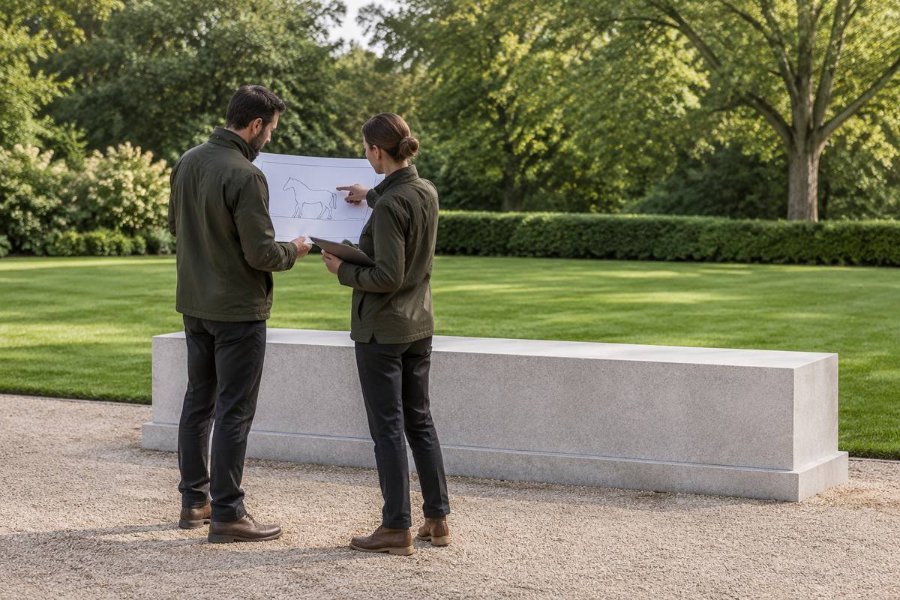
Agree on who will review the connection between the sculpture and the prepared base. This is particularly useful when separate contractors handle the foundation, stone pedestal, and final installation.
Keep the approved drawings, site photographs, delivery details, and contact list together. Everyone involved should know whom to contact if the delivered sculpture or prepared base differs from the agreed information.
6. Know What to Check on Installation Day
Delivery Inspection
Photograph the crate before opening it, especially if there is visible damage. After unpacking, inspect the bronze surfaces and accessible connection areas, check the accompanying documents, and compare the sculpture with the approved design.
Record any damage or discrepancy and contact the supplier before proceeding with an affected part of the installation.
Pre-Placement Check
Before lifting, confirm that the foundation or pedestal is ready, the mounting layout matches the approved documents, and the sculpture’s orientation is clearly marked.
The installation team should recheck the route, equipment position, and working area. Resolve mismatched connections or site conditions before placing and fixing the sculpture.
Lifting and Anchoring
The professional installation team should follow the agreed lifting and fixing plan using suitable equipment and the handling information for the piece.
Protect the bronze finish from abrasion and concentrated pressure. Lifting points and support methods must be confirmed for the sculpture, particularly around projecting features such as legs, tails, and extended heads.
Final Handover
Have the responsible installer check the completed connections and record the installation. Review the statue’s orientation from the main viewing position, inspect the visible finish and base area, and photograph the result.
Keep the final installation records with the sculpture’s care instructions. Record any approved changes to the position or mounting arrangement for future reference.
7. Customer Project: A Bronze Horse Statue Installation in Australia
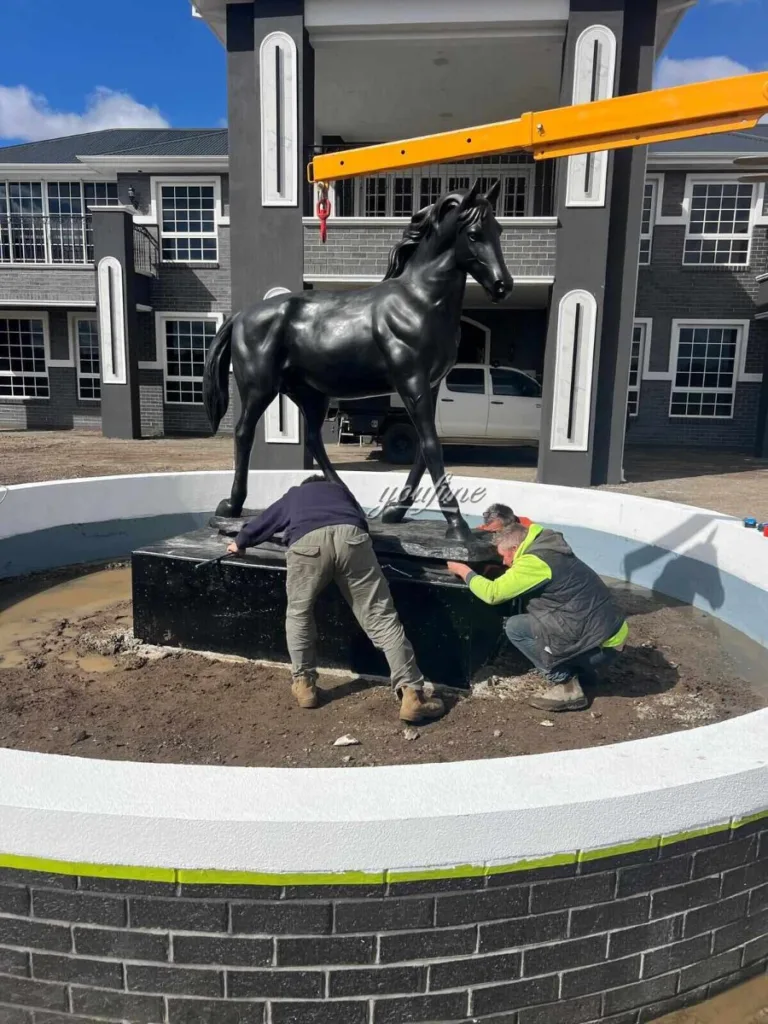
These customer-supplied photographs document our bronze horse sculpture being positioned at a property in Australia. The dark-finished horse stands on a rectangular pedestal within a circular raised enclosure, directly in front of the building’s main entrance.
On-Site Placement
In the first photograph, workers are attending to the area beneath the sculpture’s base, with a crane boom visible overhead. The surrounding ground remains unfinished, showing the installation while site work is still underway.
For buyers planning a similar setting, this photograph highlights an access question worth resolving early. A raised enclosure can affect how the team reaches the pedestal and works around the sculpture. Share the enclosure dimensions, pedestal layout, and equipment access route with your installer before delivery.
The Statue in Position
The second photograph shows the horse in position without workers around the pedestal. Its orientation presents the horse’s body toward the approach, while the raised base gives the sculpture a prominent position against the entrance façade.
The wider setting is still under construction. This view is useful for assessing the sculpture’s scale, orientation, and relationship to the building before the surrounding landscape is completed.
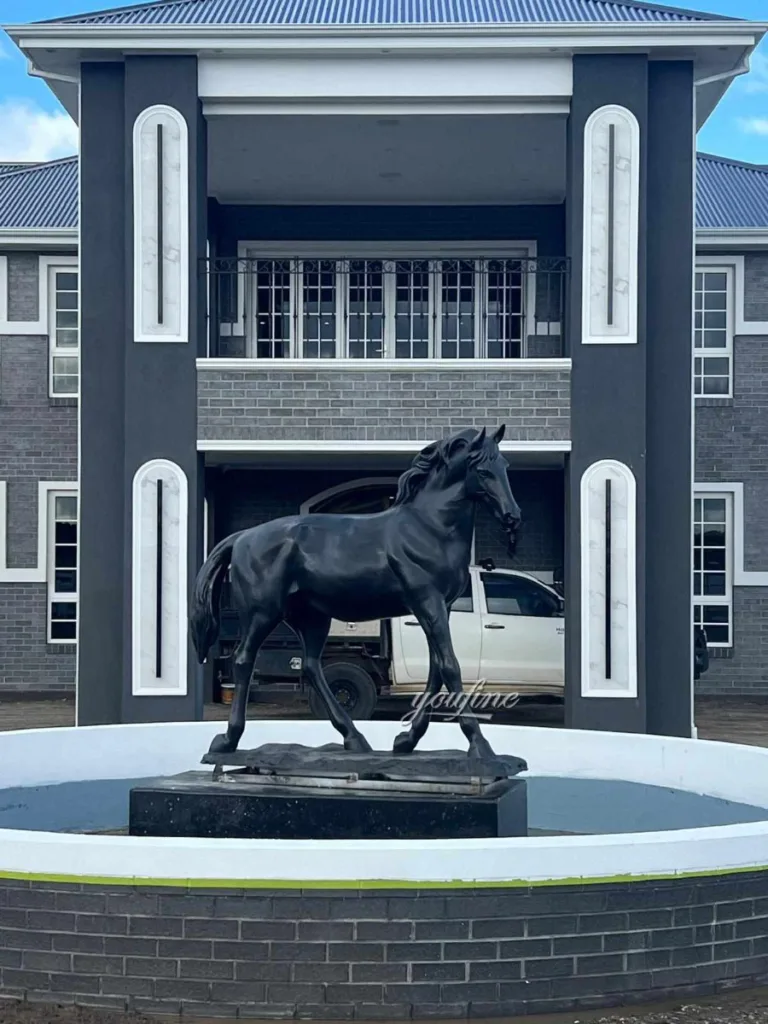
For a comparable installation, coordinate the sculpture’s base dimensions, pedestal interface, and working access before construction closes off the installation area. The concealed foundation and anchoring details are not documented in these photographs and must be confirmed separately for each project.
8. Frequently Asked Questions
Can a bronze horse statue be installed on a lawn?
Yes. A lawn setting requires a suitable support and fixing arrangement, with drainage and the finished ground level considered during planning. Send site photographs to the foundry and have a qualified local professional confirm the foundation and anchoring details.
Does a bronze horse statue need a concrete foundation?
Concrete is one possible foundation material. The appropriate support system depends on the sculpture’s dimensions, weight, connections, and site conditions. The local professional responsible for the installation should confirm the design using the actual project information.
Will I need a crane to install a bronze horse statue?
The equipment depends on the sculpture and crate dimensions, their weights, the access route, and the required lifting position. Have the local installation team assess unloading and final placement before shipping so equipment and site access can be arranged in advance.
What should I prepare before the statue arrives?
Prepare the approved foundation or pedestal, clear the agreed access route, and coordinate the receiving person, installation team, and equipment. Keep the current drawings and handling information available, and confirm where unpacking and inspection will take place.
What information should I send to the foundry?
Send the project location, site photographs, available space measurements, ground or pedestal details, preferred horse design, size, and viewing direction. Include photographs and dimensions of gates, steps, slopes, and turning areas if access could affect delivery.
Start Planning Your Bronze Horse Installation
Early coordination gives the foundry and your local team time to align the sculpture, foundation, and delivery arrangements.
Send us your project location, site photographs, preferred horse design, and approximate size through our custom bronze horse service page. Include any existing pedestal measurements or access restrictions so we can discuss the sculpture information needed for your installation planning.
https://www.osha.gov/laws-regs/regulations/standardnumber/1926/1926.753↩︎