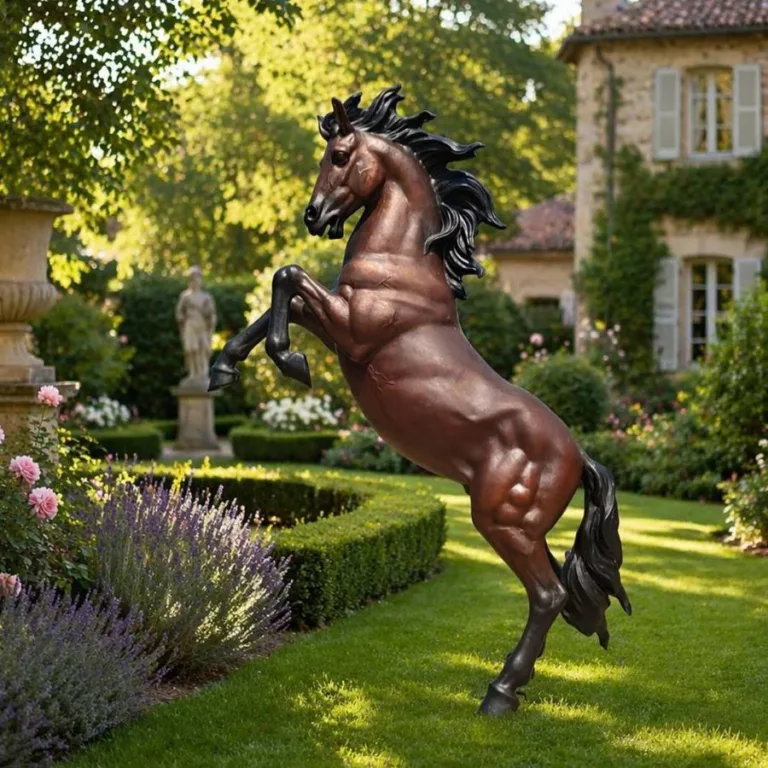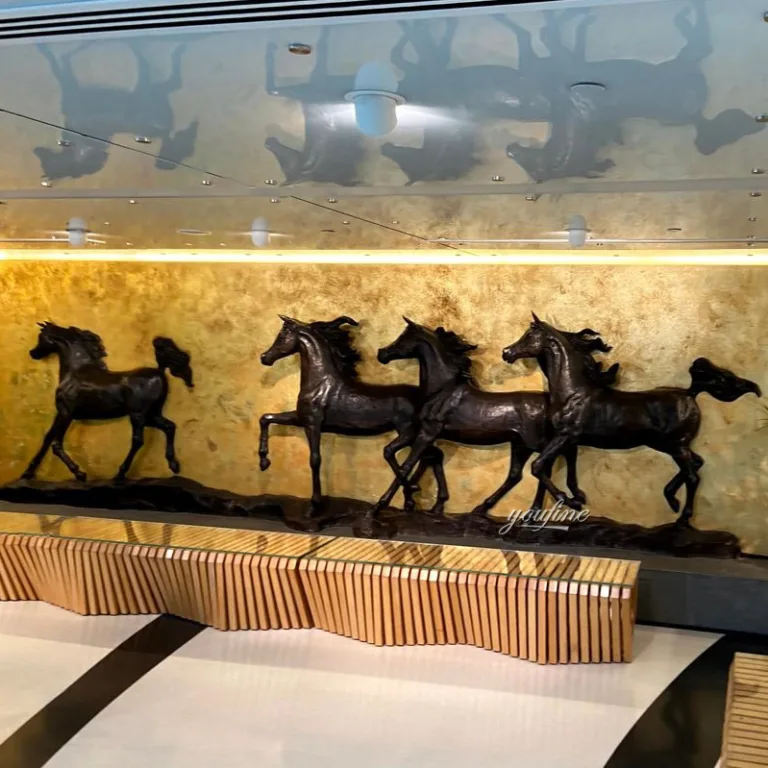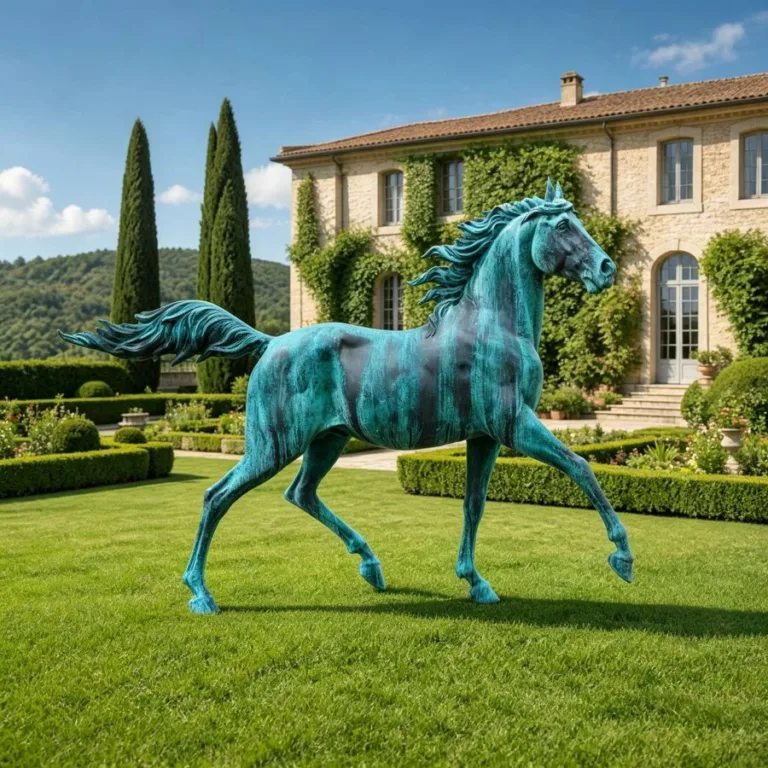

If you have spent an afternoon collecting quotes for a bronze horse sculpture, you have probably noticed something strange. Three foundries describe the same horse — same pose, same height, same bronze — and their numbers sit in three different worlds.
That is not because two of them are dishonest. It is because how much does a bronze statue cost is not really a question about price. It is a question about a specification. The figure at the bottom of a quotation summarises a long chain of decisions, and most quotations never show you the chain.
This page will not give you a generic price table, because generic tables are exactly where many bronze statue pricing mistakes begin. Those already exist, they contradict one another, and a fourth set of numbers would not help you. What no price table can offer is how a bronze horse quote is actually assembled — so that you can read any number you are handed, including ours.
We cast in Quyang, Hebei, and we have been doing it since 1983.
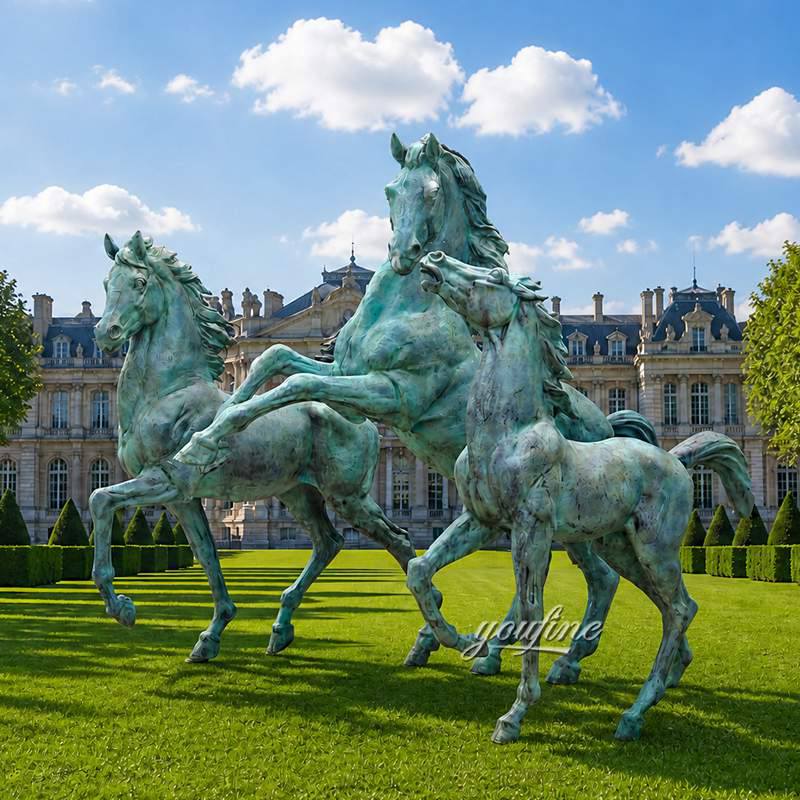
Why Two Quotes for the Same Bronze Horse Can Differ by Three Times
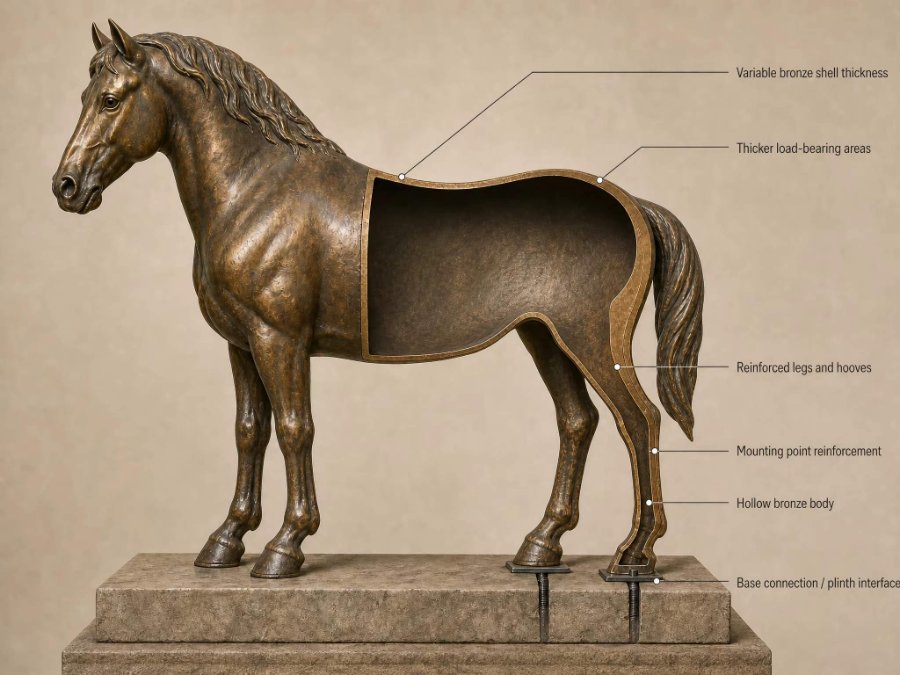
A cast bronze sculpture is not a solid block, and it is not a uniform shell either. It is hollow, and the metal is distributed unevenly — on purpose. The shell is built up where the sculpture carries load, takes wear, or meets its base: legs, hooves, mounting points, the interface with the plinth. Across the flanks, the mane and other lightly loaded surfaces, it can be thinner. A better-made horse is not one with a thicker wall everywhere; it is one where the metal has been placed intelligently, area by area.
So “What is the wall thickness?” has no single honest answer — there is no single wall. It is a range, chosen by design, changing from one part of the animal to the next. A quote that reduces a sculpture to one millimetre figure has told you very little, and a buyer who negotiates on that figure is negotiating over a number that does not describe the object.
We would go further: thickness is not a price lever you should try to pull. It is a consequence of design decisions, not a dial. Where a section is made thin, the load it no longer carries has to be carried elsewhere. The thinner one is lighter, dents more readily, and is more likely to show distortion in demanding poses unless extra reinforcement is added elsewhere. The useful question is not “how thick is it” but “how did you decide where the metal goes?”
What separates two quotes three times apart is the whole specification behind them:
- whether the sculpture needed a new original pattern, or could be built from one that already exists
- its scale and pose, which set the surface area and the work involved
- how the metal is specified
- how the sculpture is divided into cast sections, and how much chasing those seams require
- the finish
- the base, the packing and the freight
Two quotes three times apart are usually two different specifications. The work is to find out which specification you are being offered.
→ How the shell itself gets made: How a Bronze Horse Statue Is Made
What Actually Moves a Bronze Horse Quote
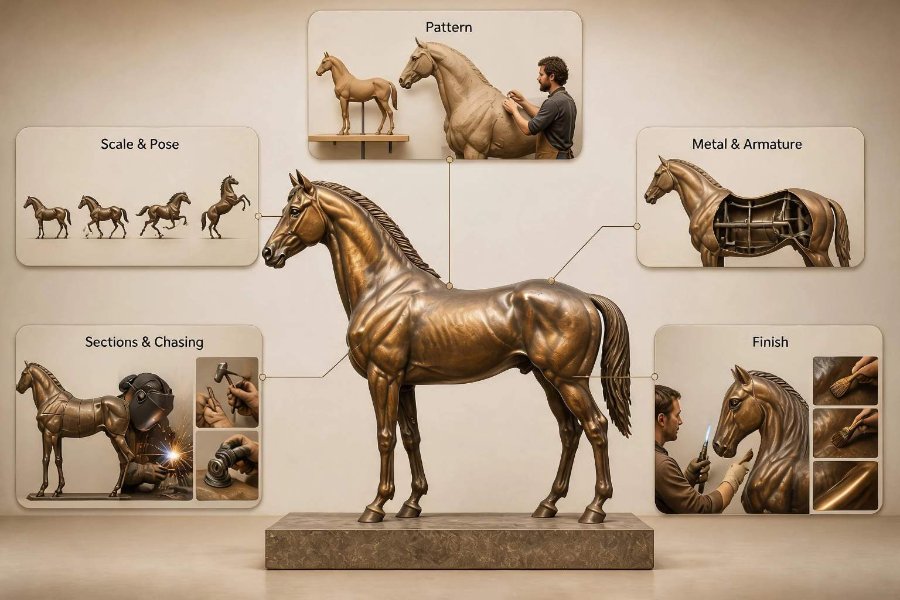
Pattern: an existing model, or an original commission. This is the largest single swing in most projects, and price guides rarely mention it. We hold more than 500 existing models; if one suits your project, the design and pattern stage is largely behind you before your quote is written. A fully bespoke horse means original sculpting, a full-size clay model, revision rounds and your approval — all before any metal is poured. Neither is better; they are simply not the same job.
Scale and pose. Size sets how much material the piece consumes and how much surface must be finished; pose sets the difficulty. A standing horse, a walking horse, a galloping horse and a rearing horse at the same height are four different manufacturing problems, and a mounted figure doubles the count again.
Material. Bronze is an alloy of copper with lesser amounts of tin, zinc and lead, and it is bought and poured by weight, so the metal in a sculpture is a genuine cost input. How much of it a piece needs follows from its size, its pose and the way it has been specified — a design decision, made well before any figure is written.
Sections and chasing. A life-size horse cannot be cast in one piece. The wax pattern is built up from many sections — commonly 30 to 80 for a full-size animal — each invested in its own ceramic shell, cast separately, and welded back into the whole. After welding comes chasing: grinding, hammering and re-texturing every seam until it disappears. How much chasing is required is settled long before the metal is poured, by where the seams fall — a seam along a ridge of muscle or a line of mane hair vanishes in minutes, while the same seam across a smooth flank or a horse’s cheek takes hours. Chasing is not a modern cost-engineering invention: the Metropolitan Museum’s account of historic foundries lists chasers alongside casters and patineurs as the specialists who jointly decide a finished bronze’s surface, colour and texture. [FN1]
Finish. Bronze colour is not paint. A patina is a chemical reaction on the surface of the metal, applied by hand and paid for as labour, not as a consumable. The US National Park Service describes untreated bronze as becoming “covered with a dull green patina from several years of oxidation of the copper in the alloy”, and treats the protective layer as a wax applied over the metal — “a hard protective barrier” against weather, sunlight and airborne contaminants. [FN2] If a specification calls a bronze finish “painted”, it is not finished the way a cast bronze statue normally is.
→ What the patina families look like: Bronze Patina Colors
How to Read a Bronze Horse Quote Line by Line
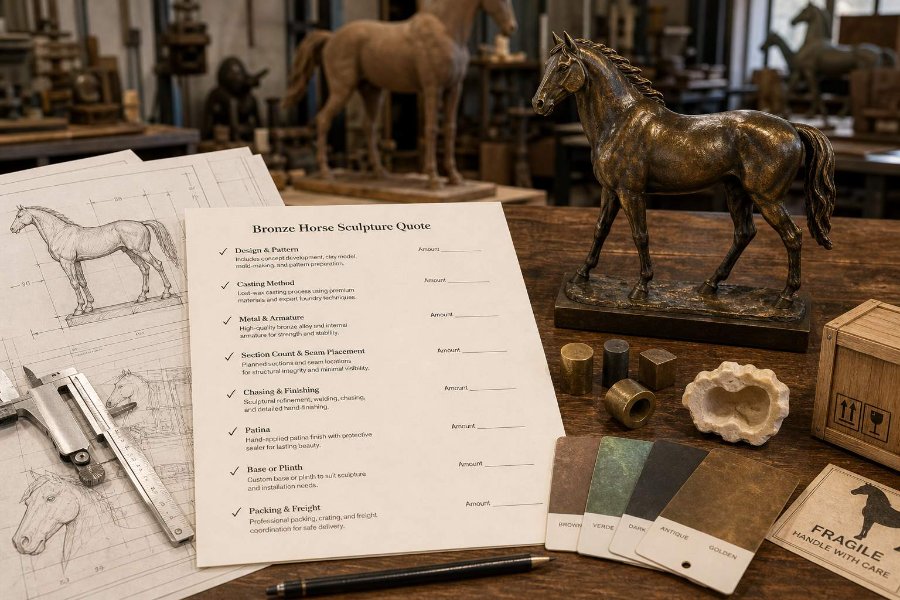
Here is the checklist we would want a buyer to use on us. A quotation you can genuinely compare should itemise:
- Design and pattern — is there a 1:1 clay model, photographed for your approval before casting?
- Casting method — lost wax, and by which shell system.
- Bronze specification — the alloy used.
- Section count, and where the seams fall.
- Chasing and finishing labour.
- Patina — hand-applied chemical, and which family.
- Base or plinth, if included, and its material.
- Packing, freight and the terms that apply — plus what is not included.
A quote that lists these eight can be compared with another that lists these eight. A quote that arrives as a single number cannot be compared with anything.
Six Warning Signs of a Quote That Is Too Low
A low price is not automatically dishonest. But in bronze it has to come from somewhere.
- The whole quotation is one number — nothing to inspect, nothing to compare.
- No photographs of a 1:1 clay model — no way to check proportion or anatomy before metal is poured.
- The quotation cannot describe how the piece is divided into cast sections.
- No packing photographs — crates, bracing and foam are a real line item, not overhead.
- The finish is described as paint.
- The schedule is shorter than the process allows. Clay, moulds, shells, casting, welding, chasing and patina are sequential.
The general rule: a much lower price is rarely just a discount on the same object. More often, something has been removed — thickness, reinforcement, finishing time, packing quality, or all of them.
Why We Do Not Publish an Average Price
We are often asked for “just a ballpark”, and we still decline — for reasons that have nothing to do with secrecy.
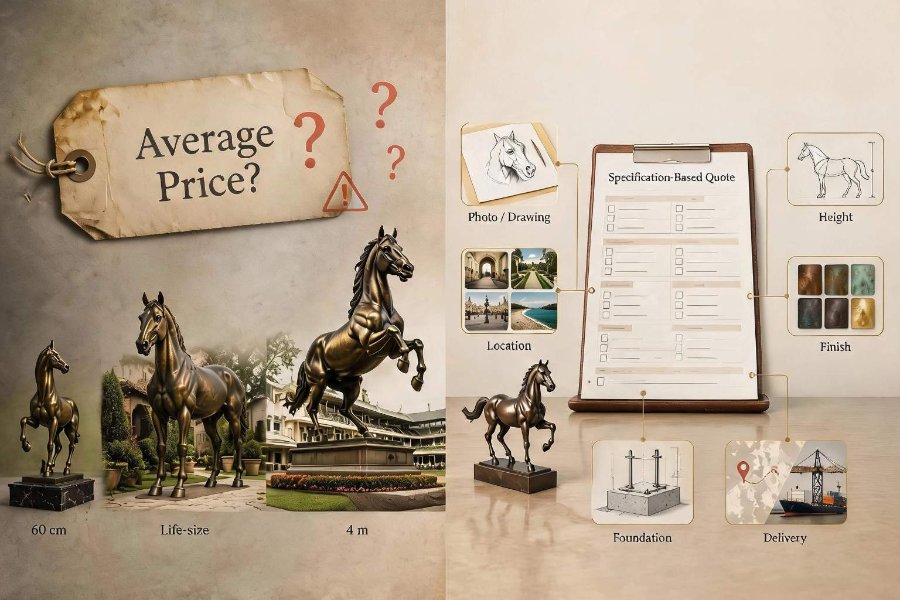
An average of what, exactly? A 60 cm tabletop piece and a four-metre monument? An existing pattern and an original commission? A standing horse and a rearing one? Any single number would be wrong for almost every reader, and wrong in the most expensive direction, because that is what averages do when they span a wide range: they read low.
There is a second reason. A buyer holding a figure tends to negotiate against the figure. A buyer holding a specification negotiates against the work. So here is what we need in order to quote accurately:
- A photograph or drawing of the horse, or the pose you have in mind
- Finished height, and whether the base is counted within that height
- Where it will stand — indoors, garden, plaza, racecourse, or an exposed coast
- The finish family you want
- Whether you need a foundation or installation plan
- Your delivery city and port
Send those and we will prepare an itemised quotation showing casting method, finish, packing and freight — so you can compare the work, not just the number. To see how a commission runs from first photograph to installed bronze, see our custom service page; when you are ready, contact us.
The Answer, Restated
How much does a bronze horse statue cost? It depends on whether the horse needs a new pattern; how large and how posed it is; how the metal is specified; how many sections it takes and how carefully the seams were planned; and what finish, base, packing and freight it carries.
Those decisions account for most of the gap between the highest and the lowest quote you will receive. The answer is not really a number at all. It is a specification you now know how to read.
Frequently Asked Questions
Why do two foundries quote such different prices for the same horse? Usually because they are not quoting the same horse. The largest differences come from whether an existing pattern is used or a new one is sculpted, from scale and pose, and from how the metal is specified — then the section plan, the chasing the seams require, the finish and the logistics.
What is the most important factor in bronze horse statue cost? There is no single factor, and that is the honest answer. The biggest swings usually come from whether the project needs a new original pattern or can use an existing one, and from scale and pose. Wall thickness varies across a sculpture by design, so treating it as one negotiable number is not a reliable way to compare quotes.
Is a life-size bronze horse more expensive than a standing human statue? Usually, yes. A horse has a larger surface area, more complex anatomy, longer horizontal spans, and greater structural demands, especially in racing, jumping or rearing poses.
Does shipping affect the final cost? Yes. Large bronze horse statues require export-grade wooden crates, internal bracing, moisture protection and freight coordination. For international projects, packing and freight should always be listed separately in the quote.
Should I simply choose the lowest quote? Choose the quote that is specific enough to be checked. A detailed quotation is normally cheaper over the life of the piece than a low one that describes nothing.
Is bronze worth more than fibreglass for an outdoor horse? They are built for different jobs. Fibreglass is lighter and less expensive, and suits indoor display, events and short-term installations. Cast bronze is heavier, needs a designed foundation, and is the material chosen for estates, memorials and public art.
Do you provide installation support? Yes. Every piece ships with foundation requirements and assembly guidance, and complex installations can be supported by video.
Can you make a horse from photographs? Yes. Send photographs and, for a specific animal, the details that matter — markings, build, equipment. We will produce a design for your approval before casting.
Can you match the pose of a horse I already own? Yes. We work from photographs, drawings or reference images; for a specific animal, a group of images from several angles rather than a single photograph.