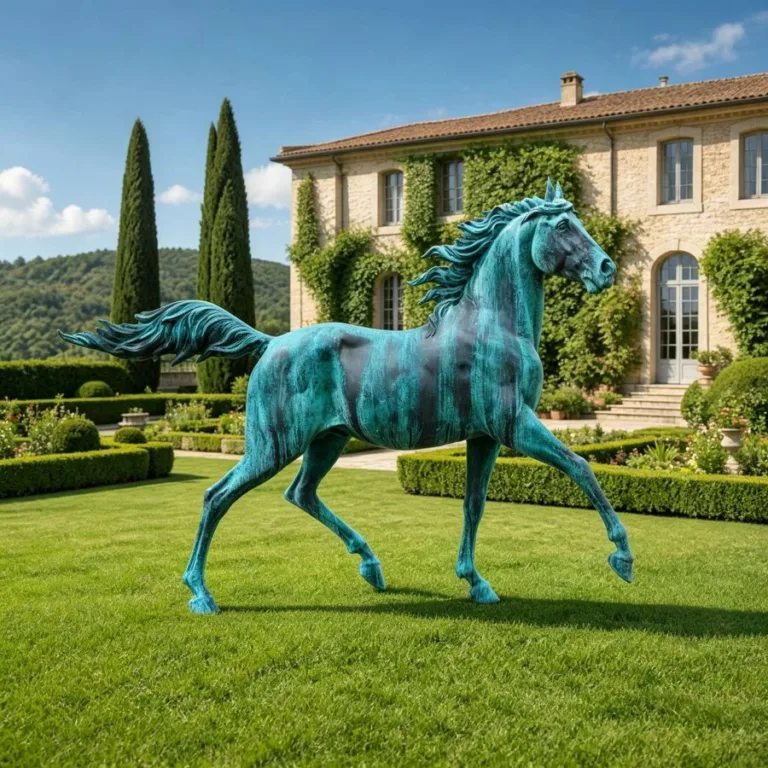

An outdoor bronze horse needs regular cleaning, care of its protective finish, and checks of the base and supporting connections. Changes in colour are often part of normal weathering, but loose corrosion, cracks, and movement need a closer look.
Start by identifying the finish. A patinated bronze protected with wax may need different care from one with a lacquer or another coating. If you do not know what was applied, ask the foundry before using cleaners or adding wax.
This guide covers routine owner maintenance. It is not a substitute for a conservation assessment or a structural inspection.
Why the Horse’s Design Matters
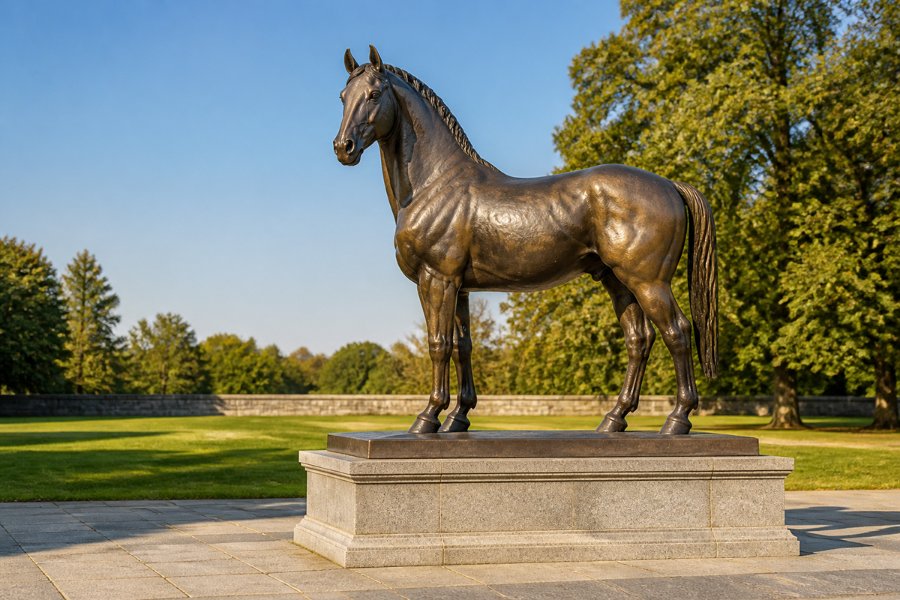
The pose affects which parts need attention. A standing horse, a rearing horse and a galloping horse can have different support arrangements. Some include internal reinforcement or an additional support through the tail.
Pay particular attention to the legs, hoof-to-base connections, base plate and visible anchoring points. Projecting legs and tails also need protection from accidental impact and climbing.
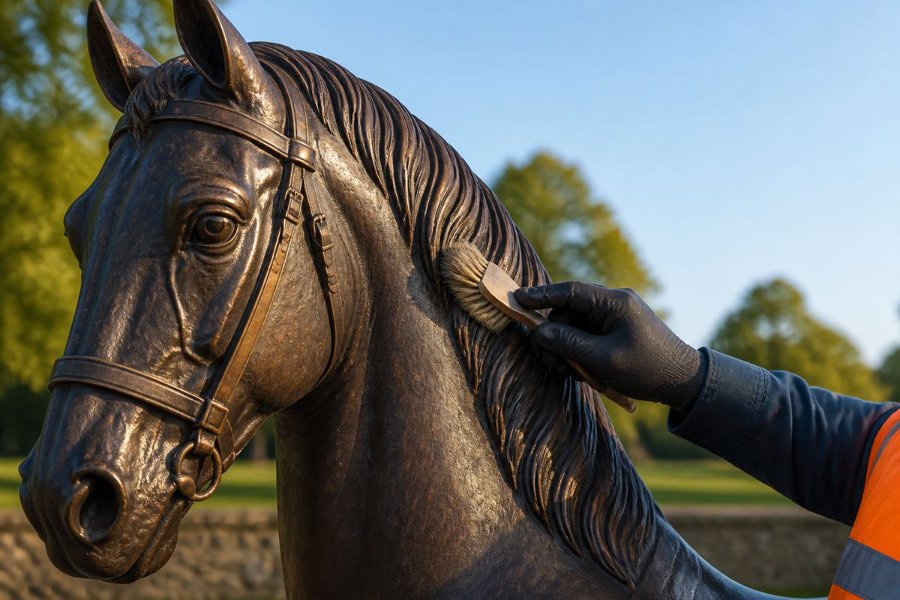
The mane and tail have a different maintenance problem: their grooves can hold dirt, leaves and bird droppings. Areas people touch, such as the muzzle and shoulder, may develop worn wax, polished patches or staining.
What to Inspect
For routine owner checks, inspect the sculpture at least twice a year and after an impact, flooding or other event that may have affected it. The installation provider may specify a different schedule.
Look for:
- New leaning, gaps or changes around the base.
- Cracks in the plinth or surrounding foundation.
- Loose or visibly damaged accessible fixings.
- Cracks around the legs, supports and hoof-to-base connections.
- Unusual staining, persistent damp areas or blocked drainage openings.
- Powdery deposits, lifting surface layers or loss of the protective coating.
Low-angle light can make surface cracks easier to see, but a visual check cannot confirm the condition of internal supports or hidden welds.
Do not push or rock the sculpture to test its stability. If movement is noticed during normal use, keep people away and contact the installer or a qualified structural professional.
Cleaning the Surface
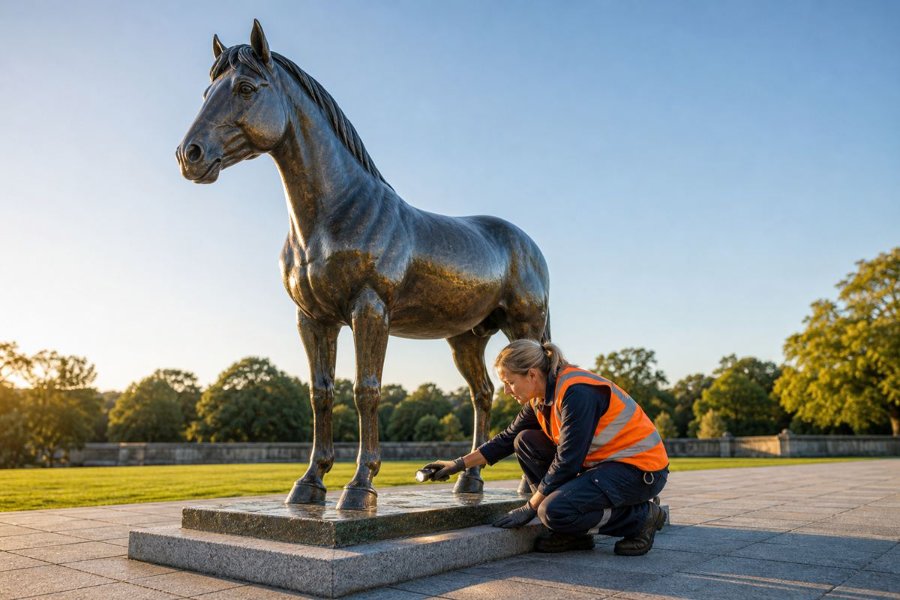
Use the gentlest method that removes the dirt. Published conservation guidance 1supports regular cleaning and renewal of suitable protective coatings, but the method should suit the sculpture’s existing finish
For light dirt:
- Gently remove loose debris with a clean, soft brush.
- Wash with clean water and a soft cloth or brush.
- If needed, use a mild cleaning product approved for the finish by the foundry or a conservator.
- Rinse thoroughly and dry accessible surfaces with a clean, soft cloth.
If local tap water leaves mineral marks, use distilled or de-ionised water for the final rinse. Avoid washing a very hot surface in direct sun, where water and cleaner can dry before they are rinsed away.
Do not use metal polish, abrasive pads, wire brushes, bleach or acidic household cleaners. These can damage the patina or protective coating.
Avoid pressure washers for routine owner maintenance. Controlled pressure washing has been used in professional conservation treatments, but it is not a suitable default method for an owner cleaning an unknown finish.
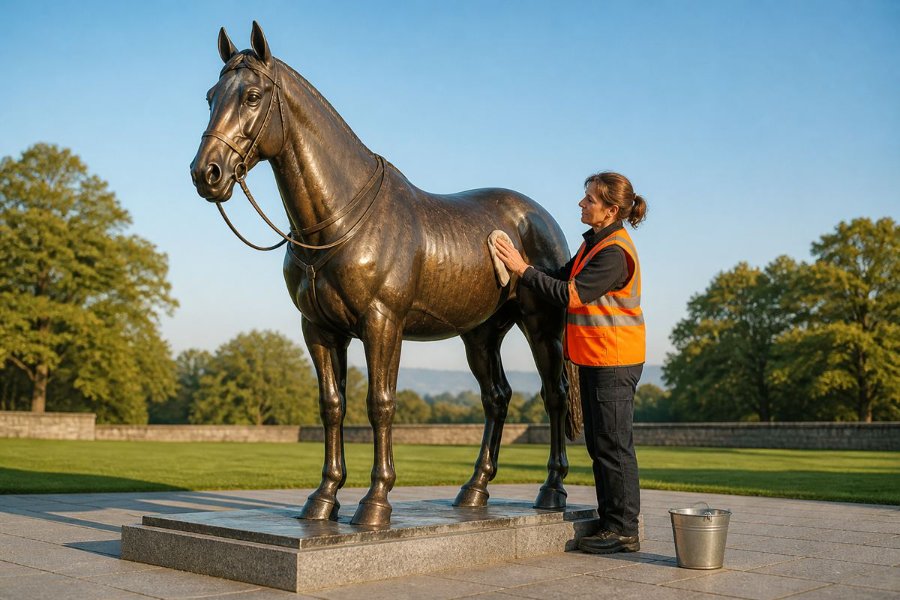
Mane, Tail and Bird Droppings
Use a soft brush to clear the grooves in the mane and tail. Soften dried bird droppings with water before gently removing them; do not scrape them off.
Do not pull on projecting details or force tools into narrow gaps. If material cannot be removed without force, ask for advice.
Maintaining the Wax or Other Protective Coating
Wax provides a renewable protective layer, but it wears and weathers outdoors. It reduces exposure to moisture and contaminants; it does not make the sculpture waterproof or remove the need for inspection.
Before waxing, confirm that wax is appropriate for the existing finish. Use the product and method recommended for that sculpture.
Where routine cold application is approved:
- Clean the surface and allow it to dry fully.
- Apply a thin, even coat.
- Avoid leaving thick deposits in grooves or around joints.
- Buff only as directed by the product instructions.
Do not heat the sculpture with a torch or heat gun as a routine maintenance step. Hot-wax treatments should be left to trained personnel who understand the finish, the wax formulation and the safety requirements.
Historic sculptures, damaged finishes and active corrosion should be assessed before further wax is applied.
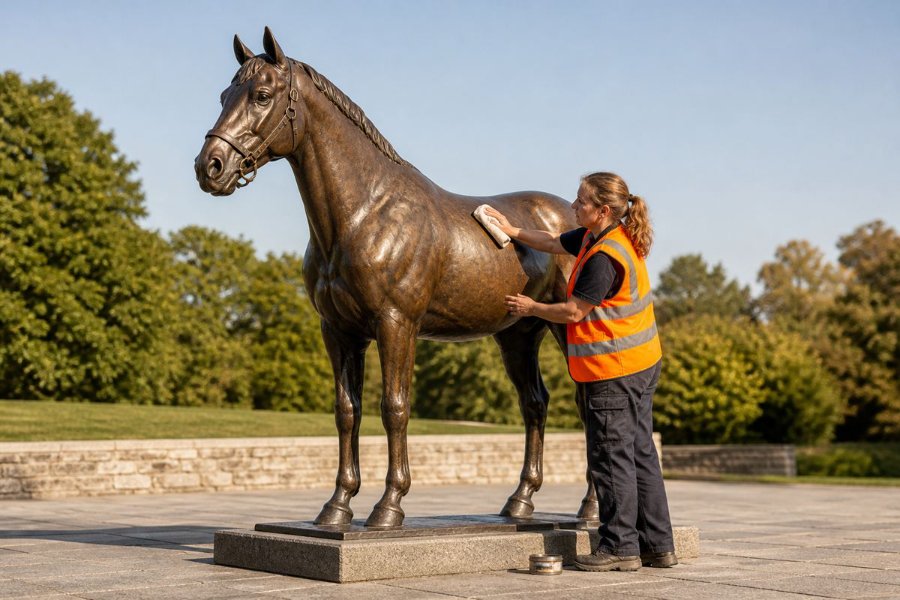
Touching, Sitting and Climbing
Hands transfer moisture, salts and oils to metal surfaces. These contaminants can contribute to staining and corrosion, particularly when the protective coating is worn.
Check frequently touched areas more often than sheltered, untouched areas. Clean them gently when dirty rather than waiting for the next scheduled waxing.
Sitting and climbing are separate safety concerns. Unless the sculpture was specifically designed and assessed for that use, do not allow either. A discreet sign, low barrier or suitable landscaping can help reduce contact without obscuring the sculpture.
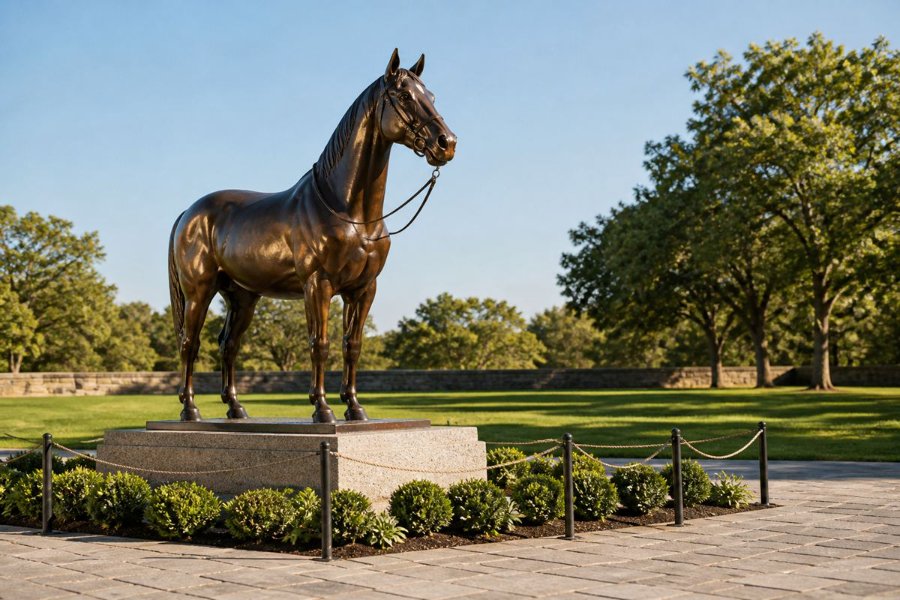
Near Stables or Paddocks
A sculpture near animal facilities may be exposed to urine, manure, contaminated wash water and emissions from poorly ventilated buildings. Ammonia is a relevant pollutant for certain copper alloys, but exposure varies with ventilation, distance and site conditions.
Keep the bronze away from areas where waste or wash water collects. Avoid locations directly exposed to stable exhaust, and do not let damp hay, bedding or manure accumulate against the base.
Inspect more frequently if the sculpture is regularly contaminated. The need for cleaning and coating renewal should follow its actual condition, not simply the fact that horses are nearby.

Base and Winter Care
Keep the area around the base clear of leaves, soil and mulch. Check that rainwater and irrigation water do not pool against the bronze or around its fixing points.
If water repeatedly collects around the base, or you notice unexplained staining or persistent damp patches, contact the foundry or installation team. Do not drill into the sculpture or alter its fixings yourself.
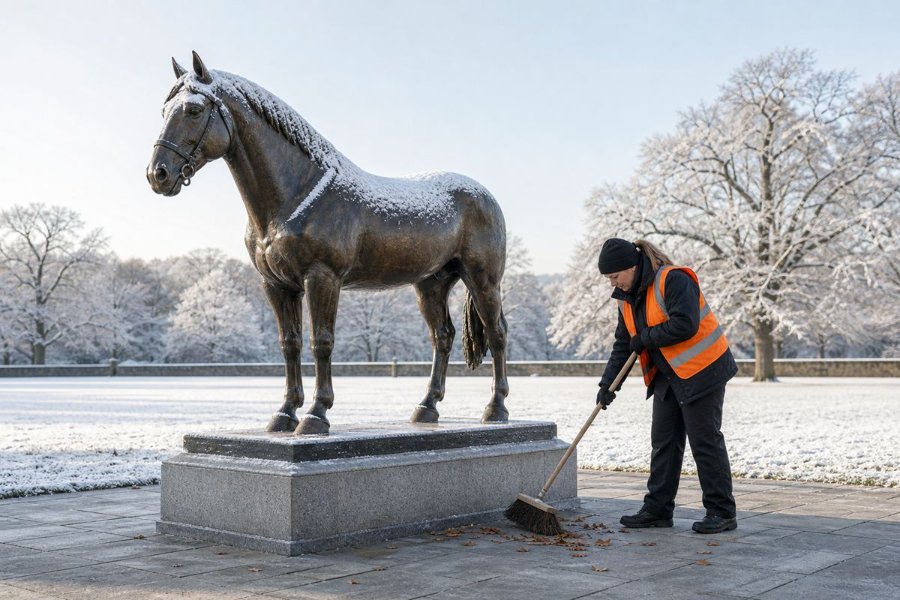
In winter, keep de-icing salt away from the sculpture where possible. If salt spray or slush reaches the bronze, gently rinse the affected areas when the water can drain away without refreezing. Avoid piling snow against the base or scraping the bronze with metal tools.
Green Patina or Active Corrosion?
Green colour alone does not show whether a bronze surface is deteriorating. Copper-alloy patinas can include green, brown, black and other colours. Their condition matters more than the colour itself.
Signs that need professional attention include:
- New or recurring powdery deposits.
- Loose flakes or lifting surface layers.
- Cracking or spalling of the surface.
- Rapid, localised changes accompanied by loss of material.
Photograph suspicious areas before cleaning. Do not repeatedly scrub away deposits or cover them with wax.
Contact a metals conservator for suspected active corrosion2. For movement, damaged supports or anchoring problems, restrict access and contact a qualified structural professional.
A Practical Maintenance Schedule
Use the sculpture’s care instructions as the starting point. The following is a planning guide, not a guaranteed coating lifespan.
| Situation | Maintenance approach |
|---|---|
| Sheltered garden or terrace | Check the base twice yearly; assess the surface and protective coating at least annually. |
| Coastal or persistently humid location | Inspect more frequently for contamination, coating wear and corrosion. |
| Public or frequently touched location | Check touch zones and projecting details more often; clean as needed. |
| Near stables or contaminated ground | Inspect after contamination and remove deposits promptly. |
| Exposure to de-icing salt | Add cleaning after salt exposure when weather permits. |
| Very hot or exposed site | Monitor coating condition and follow product-specific advice. |
Some outdoor waxed bronzes need annual cleaning and waxing; exposed or heavily handled pieces may need more frequent care. Do not assume that every sculpture can safely wait two years.
Keep the Project Records
Keep the finish specification, approved cleaning products, installation drawings and any drainage information with the sculpture’s records. Make them available to gardeners, grounds teams and future owners.
An online guide is useful, but it should supplement the instructions for the particular sculpture.
Frequently Asked Questions
How often should I wax an outdoor bronze horse?
Follow the instructions for its finish and assess the coating at least annually. Exposure, handling and the wax product affect how often it needs renewal. Do not apply wax over suspected active corrosion without advice.
Can I use tap water?
Clean tap water may be suitable. If it leaves mineral deposits, use distilled or de-ionised water for the final rinse and dry accessible surfaces.
Can I use a pressure washer?
Not for routine owner maintenance. Use gentle washing methods. Professional cleaning treatments require a separate assessment.
Is green patina a sign of damage?
Not necessarily. Look for powder, loose flakes, cracking and ongoing material loss rather than judging by colour alone.
Can visitors sit on the horse?
Only if it was specifically designed and assessed for that use. Otherwise, prevent sitting and climbing.
What if the sculpture moves?
Do not keep testing it. Restrict access and contact the installer or a qualified structural professional.