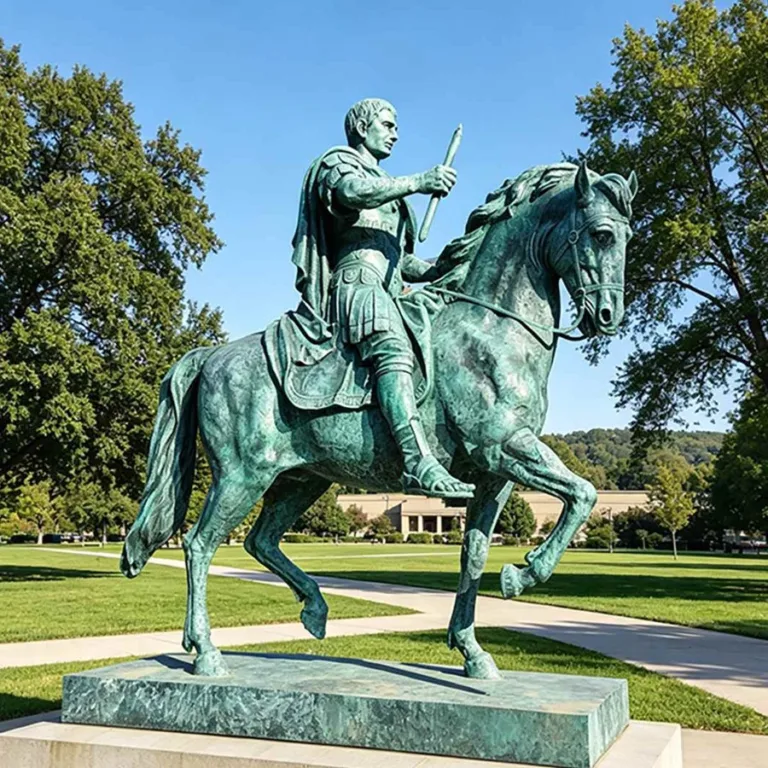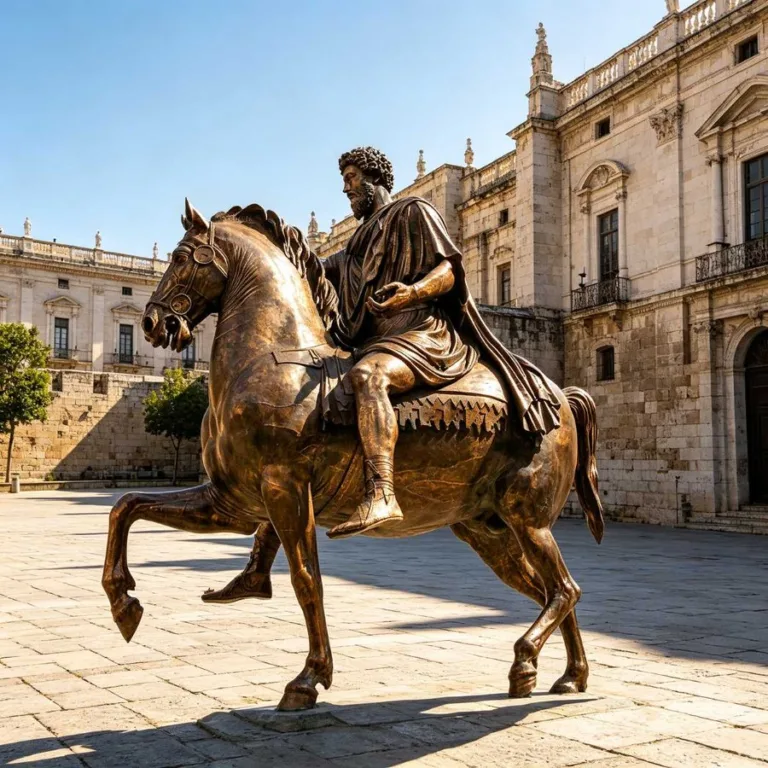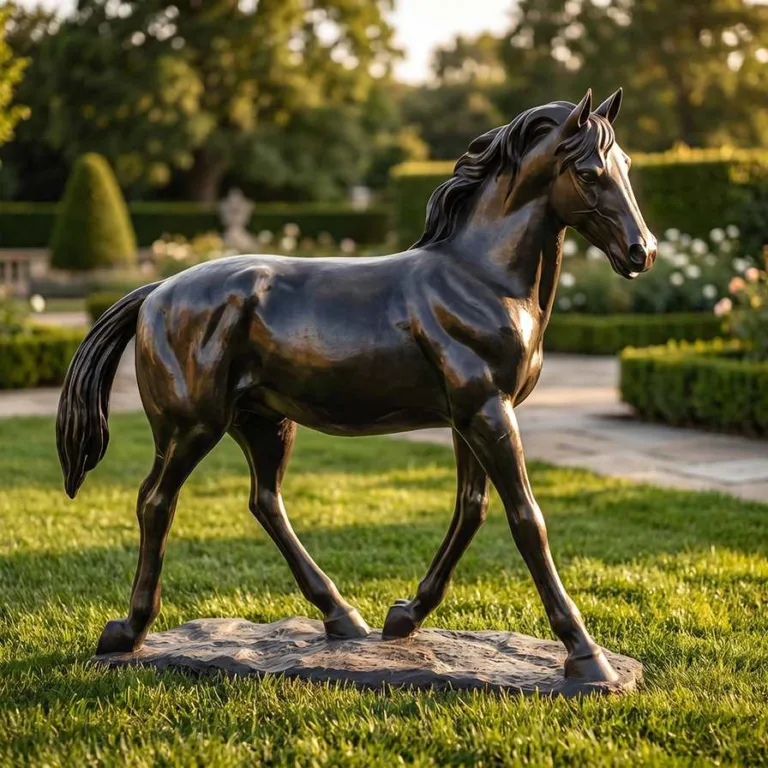

When you ask several foundries for a quote for the same bronze horse sculpture, you may receive very different prices. We see this quite often in custom sculpture projects. Two quotations may show a similar horse, but the work behind each price can be quite different.
One foundry may use an existing model, while another needs to create a new clay model. One price may include a bronze pedestal and export packaging, while another covers only the sculpture. The casting method, sculpture weight, surface finish and delivery terms can also affect the final cost.
We have been working in sculpture production since 1983. Over the years, we have handled many custom sculpture orders and international projects. From our experience, comparing quotations is not simply about finding the lowest price. It is about understanding what each foundry will make, what services it will provide and what you will receive at the end.
Here are the points we suggest checking before choosing a bronze horse sculpture foundry.
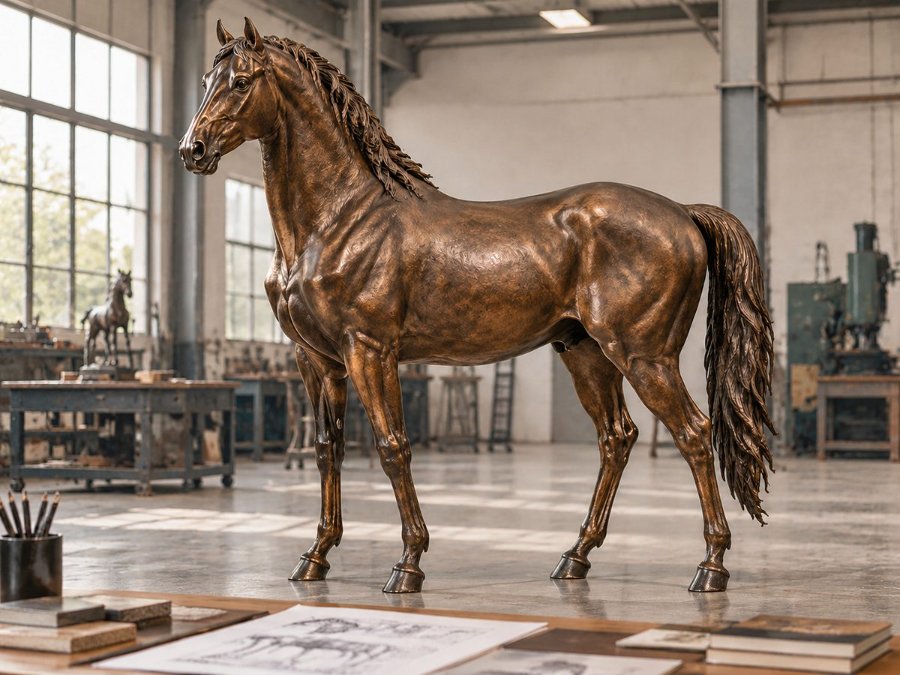
1. Check What Is Included in the Quotation
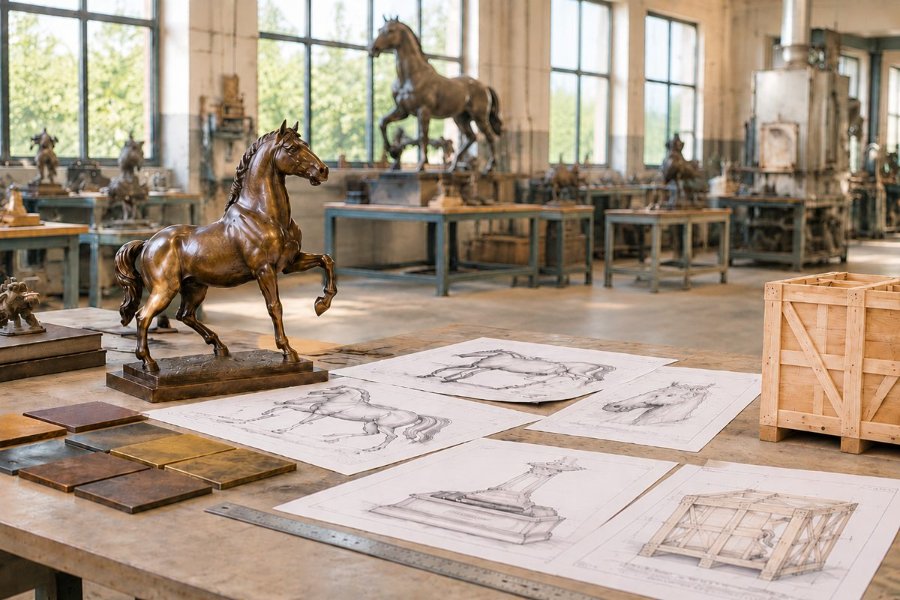
We always suggest starting with the quotation itself. Before comparing prices, make sure you know exactly what each foundry has included.
For a custom bronze horse sculpture, a quotation may cover several different items:
- Bronze horse sculpture and agreed dimensions.
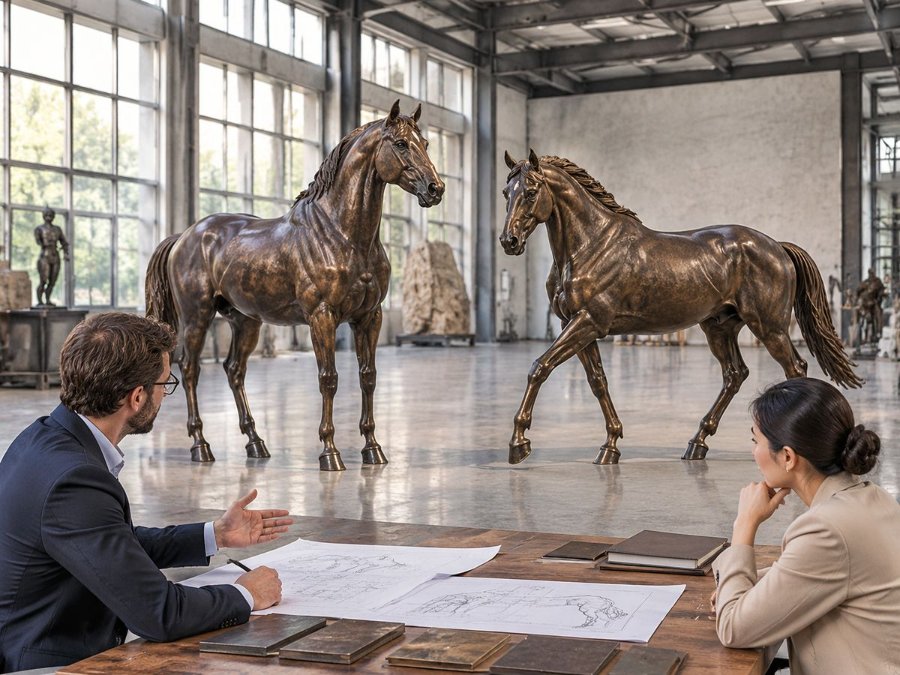
- Custom design or clay modeling.
- Mold and pattern-making costs.
- Bronze casting, welding and grinding.
- Patina and surface protection.
- Bronze or stone pedestal, if required.
- Quality inspection and design approval.
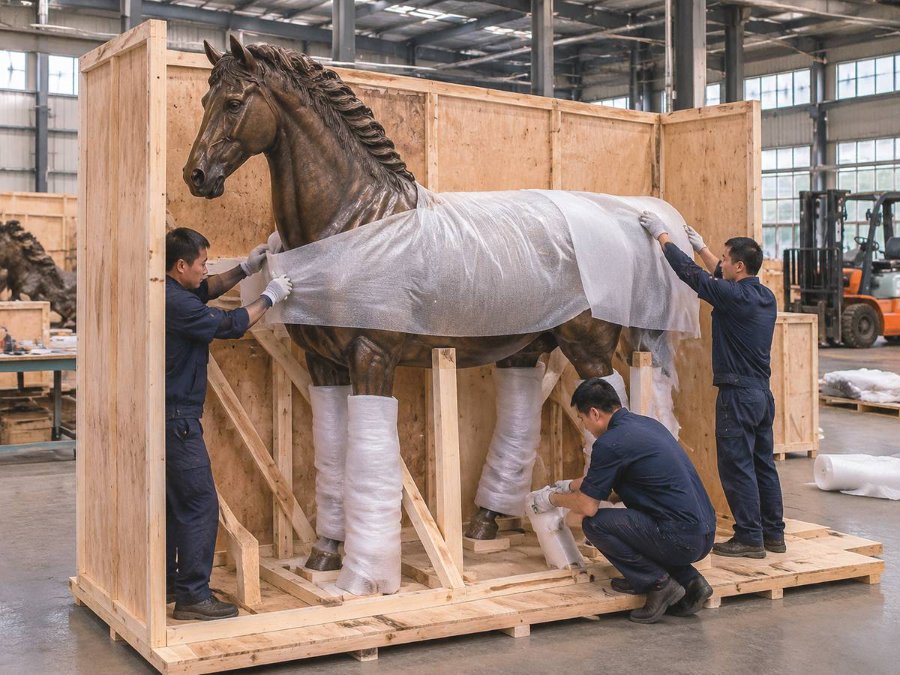
- Export wooden crates and protective packing.
- Loading and container arrangements.
- Installation drawings and technical information.
Not every project needs all these services. For example, some customers already have a pedestal, while others need us to design one to match the sculpture.
We also recommend checking whether the price covers one complete sculpture or several sections that need to be joined during production or installation. This can make a difference, especially for large horse sculptures.
Here is a simple example of how two quotations can differ:
| Quotation Item | Foundry A | Foundry B |
|---|---|---|
| Bronze horse sculpture | Included | Included |
| Custom clay model | Extra cost | Included |
| Bronze pedestal | Excluded | Included |
| Antique brown patina | Included | Included |
| Export wooden crate | Included | Included |
| Installation drawings | Included | Excluded |
In this example, Foundry A may look cheaper at first. However, after adding the clay model and pedestal, the final prices may be much closer.
If you want to understand how sculpture size, pose, materials and finishing affect the final price, you can also read our guide on what affects the cost of a bronze horse statue
2. Compare Bronze Materials and Casting Methods
The word bronze can mean different copper-based alloy specifications. When comparing quotations, we recommend asking each foundry what material it plans to use.
For a large outdoor bronze horse sculpture, material selection and casting quality both deserve attention.
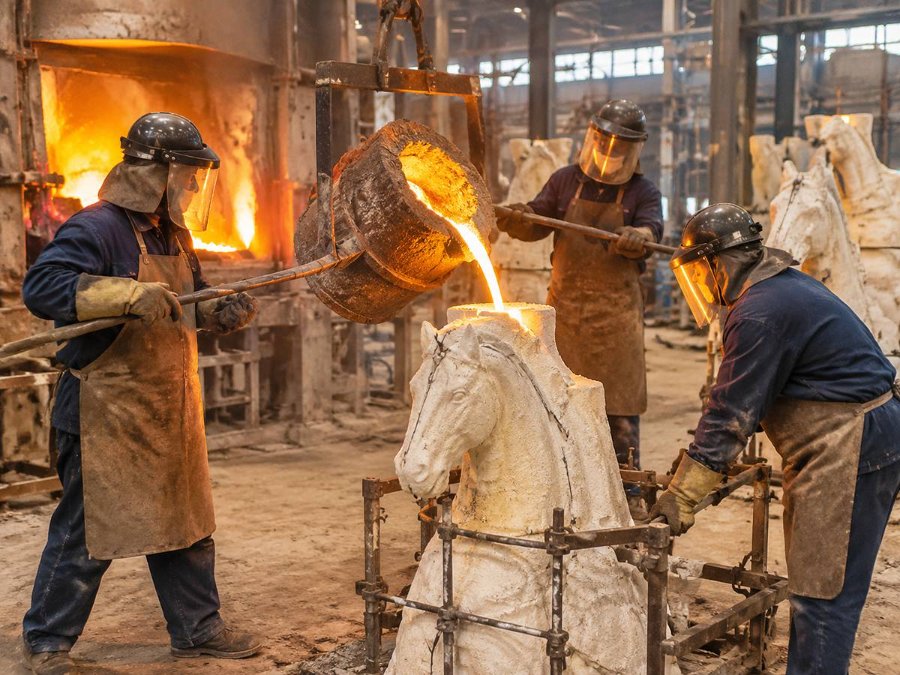
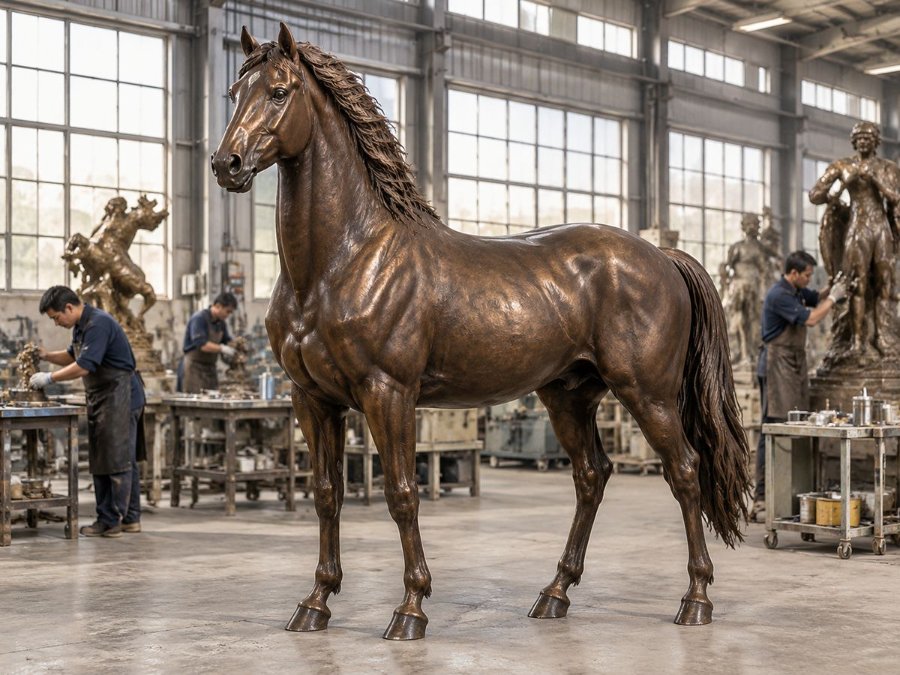
We use the lost-wax casting process for our bronze sculptures, with silica sol shell-making as part of our casting process. This allows us to reproduce fine details while making different sections for larger sculptures.
When reviewing another foundry’s quotation, we suggest asking:
- What bronze alloy or material specification will you use?
- Which casting method do you use?
- Will the horse be cast as one piece or several sections?
- How will the separate sections be welded and finished?
- How will you reproduce details such as the mane, tail, muscles and facial features?
- What patina and protective finish are included?
The horse’s appearance is also worth checking. Look closely at the face, ears, eyes, mane and legs. These details have a strong effect on the finished sculpture.
We also suggest asking for photographs of similar completed horse sculptures. A foundry’s actual work tells you more than a technical description alone.
Be careful when a quotation simply says “solid bronze” or “100% bronze.” Ask the supplier what this means and whether it refers to the cast body, visible material or the complete construction.
The important thing is to understand what you are paying for and whether the proposed material and casting process suit your project.
3. Compare Sculpture Size, Weight and Structural Design
Two bronze horse sculptures can have the same height but very different production costs.
The reason is simple: their poses, proportions, weight and structural requirements may not be the same.
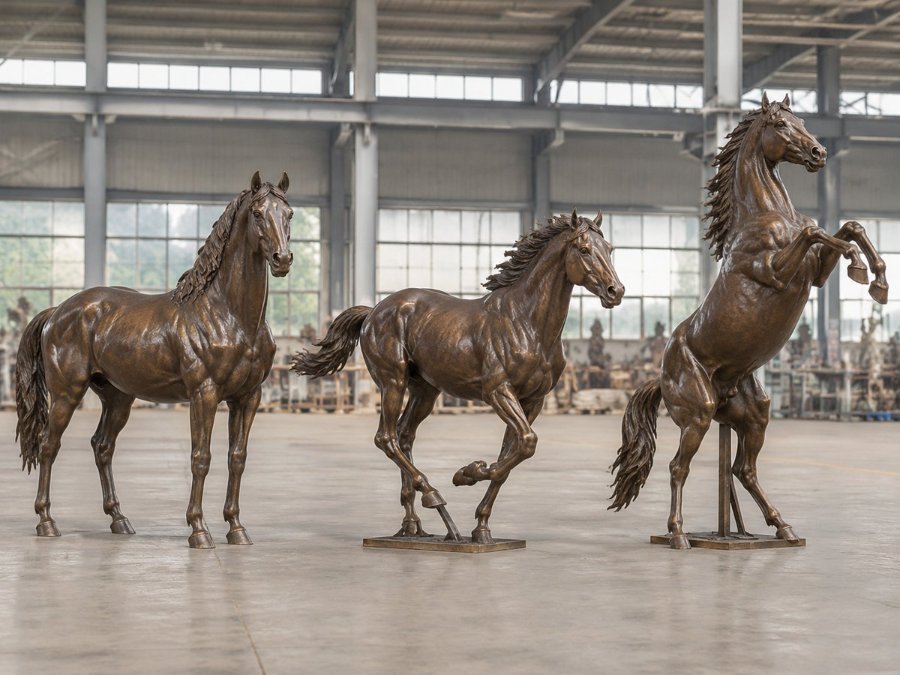
For example, a standing horse usually has a different support arrangement from a rearing horse. A running horse with extended legs may need more attention to its internal structure and mounting points.
When comparing quotations, ask each foundry to provide:
- Overall height, length and width.
- Base dimensions.
- Estimated finished weight.
- Estimated packed weight.
- Crate dimensions.
- Mounting-point locations.
- Information about internal support, where applicable.
Make sure everyone is measuring the sculpture in the same way. Does the height include the pedestal? Is the length measured from the nose to the tail? These small details can cause confusion when comparing prices.
We also recommend looking at the actual horse pose before comparing the cost.
A few common examples include:
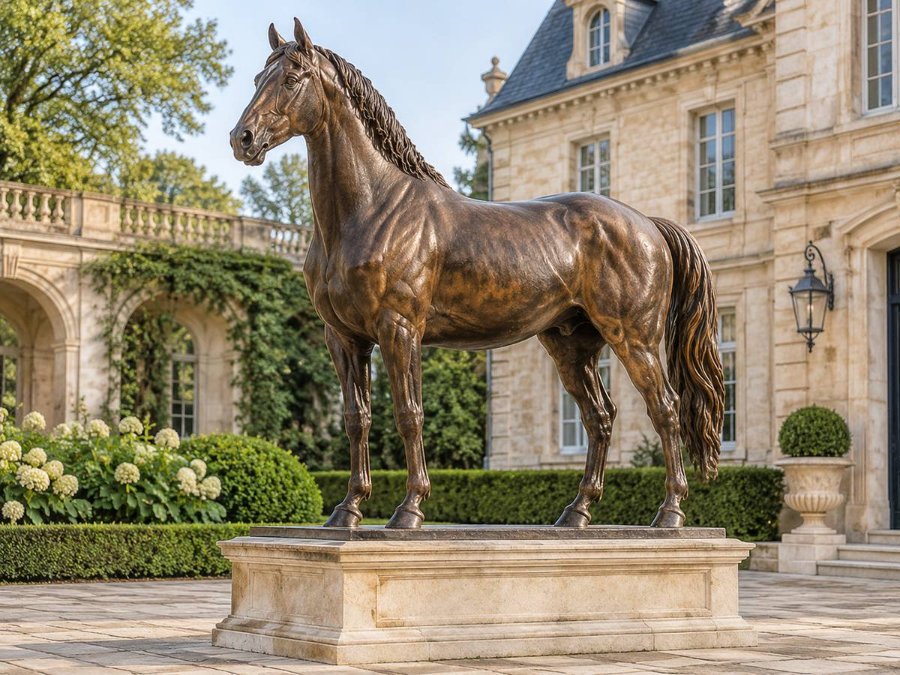
- Standing Horse: A classic pose often used in gardens and estates.
- Walking Horse: A more natural pose with different leg positions.
- Running Horse: A dynamic design that needs careful attention to the extended legs and body proportions.
- Rearing Horse: A more challenging pose that requires careful structural planning.
- Horse and Rider: A combination sculpture with additional modeling and detail work.
For large outdoor sculptures, we also suggest discussing the base connections and foundation requirements before production.
A professional foundry should be able to provide the relevant sculpture dimensions, weight information and mounting details. The final foundation and anchoring design should then be reviewed by the qualified professional responsible for the installation site.
4. Understand the Cost of Custom Horse Sculpture Design
Custom design is another reason why bronze horse sculpture quotations can differ.
In our experience, customers usually come to us with one of three requirements.
Existing Horse Sculpture Models
Some customers find a horse design they like in our existing collection. They may only need to change its size, patina or pedestal.
This is usually a more direct production process because the basic model already exists.
Modified Horse Designs
Sometimes a customer likes an existing design but wants to make a few changes.
For example, they may want a different head position, a longer mane, a slightly different leg position or a different overall proportion.
These changes require additional design work, depending on their complexity.
Completely New Custom Horse Sculptures
Some projects start with only a photograph, drawing or reference image.
In this case, we need to develop the sculpture from the beginning. The process may involve design discussion, clay modeling, customer approval and further adjustments before casting.
Before accepting a quotation, we suggest asking:
- Is the price based on an existing model or a new design?
- Does it include clay modeling?
- How many design revisions are included?
- Can I review the clay model before casting?
- Will changes after approval cost extra?
- Who owns the custom design and mold after production?
The last question is particularly useful for customers who may need similar sculptures for future projects. Design and mold ownership should be agreed upon in writing.
A quotation for an existing model should not be compared directly with one that includes a completely new clay sculpture. They involve different amounts of work.
5. Check Quality Control and Approval Stages
For a custom bronze horse sculpture, we believe communication during production is just as important as the final inspection.
The buyer should know when the foundry will provide updates and which stages require approval.
Depending on the project, the process may include:
Design and Clay Model
Review the horse’s pose, body proportions, facial features and overall appearance before casting.
Casting and Assembly
Check production progress and the way separate bronze sections are joined, where applicable.
Welding and Surface Finishing
Pay attention to visible joints, grinding marks and the smoothness of the finished surface.
Patina and Color Approval
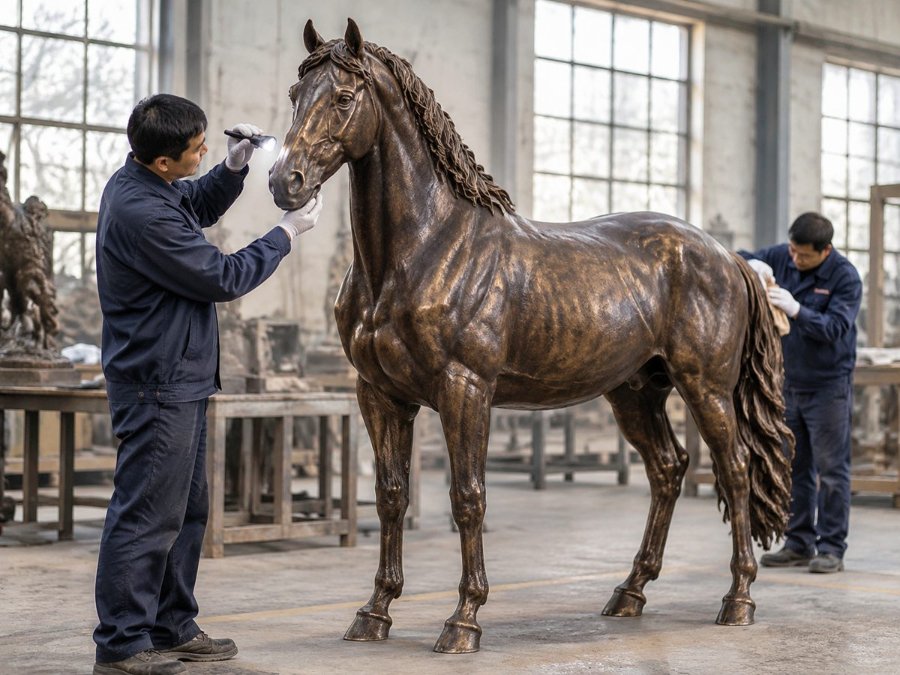
Confirm the bronze color and surface appearance. A photograph or approved finish sample can help avoid misunderstandings.
Final Inspection
Review the completed sculpture before packing. Check its appearance, dimensions, details and agreed specifications.
We recommend keeping photographs, drawings and written approvals throughout the project. This gives both the customer and the foundry a clear record of the agreed design.
There is also a difference between design approval and quality inspection. Approving a clay model means you accept the proposed appearance. Final inspection means checking whether the finished sculpture matches the approved requirements.
If you want an independent inspection, discuss the inspection company, timing, scope and cost before placing the order.
6. Compare Delivery Terms and Shipping Responsibilities
When comparing quotations from different foundries, pay attention to the delivery terms. Two suppliers may offer the same bronze horse sculpture at similar prices, but their quotations may cover different parts of the shipping process.
In international trade, you may see terms such as EXW, FOB, CFR and CIF. Each term defines different responsibilities for the seller and the buyer, including transportation arrangements, costs and the point at which risk transfers.
Before comparing prices, make sure you understand what each quotation includes.
Understand the Main Differences Between Delivery Terms
Here are four common trade terms you may find in bronze sculpture quotations:
| Trade Term | Seller’s Main Responsibility | Buyer’s Main Responsibility |
|---|---|---|
| EXW | Makes the sculpture available at the agreed place, usually the factory | Arranges collection, loading, export and transportation, subject to the agreed arrangements |
| FOB | Delivers the goods on board the vessel at the named port and handles export clearance | Arranges main sea freight, insurance if required, and destination-side procedures |
| CFR | Arranges and pays for transportation to the named destination port | Handles insurance if required, import clearance and destination charges |
| CIF | Arranges and pays for transportation and minimum required cargo insurance to the named destination port | Handles import clearance and destination charges |
These terms follow the general rules of Incoterms® 2020. The exact named place or port should always be stated in the quotation and sales contract.
There is also an important difference between transportation costs and transportation risks. Under CFR and CIF, the seller pays for the main carriage to the destination port, but the risk generally transfers to the buyer once the goods are on board the vessel at the port of shipment. Under CIF, the seller also arranges the required minimum cargo insurance.
Check What Is Included in Each Quotation
We suggest asking each foundry to clarify the following points:
- Is export customs clearance included?
- Does the price include transportation to the named port?
- Is ocean freight included?
- Is cargo insurance included?
- Who handles unloading and destination charges?
- Who is responsible for import customs clearance and local delivery?
For bronze horse sculptures, we also recommend checking the export packaging separately. Confirm the wooden crate specifications, internal protection, packing dimensions and total packed weight.
Do not assume that two quotations cover the same services simply because they use the same trade term. The named location, agreed charges and additional services can still differ.
Check Production Time and Pre-Shipment Support
Delivery terms are only one part of the delivery arrangement. You should also confirm the foundry’s production schedule and the services provided before shipment.
We recommend checking:
- Estimated production time.
- Final inspection and packing time.
- Expected ready-to-ship date.
- Installation drawings and mounting details.
- Assembly instructions or remote installation guidance, if available.
For large bronze horse sculptures, it is helpful to discuss the installation location before production. Site photographs, access measurements and foundation information can help us understand the project and prepare the relevant technical details.
A clear quotation should show where the seller’s responsibility ends and where the buyer’s responsibility begins. This helps avoid unexpected costs and makes it easier to compare the actual delivery arrangements between foundries.
7. How to Make a Fair Comparison Between Foundries
After checking the details above, put all the information together.
We suggest using the same comparison headings for every supplier. This is much more useful than placing three total prices side by side.
| Comparison Item | What to Check |
|---|---|
| Sculpture design | Same pose, size and proportions? |
| Bronze material | Comparable alloy specifications? |
| Casting | What casting process is proposed? |
| Finished weight | Are the weight estimates similar? |
| Custom work | Existing model or new clay model? |
| Pedestal | Included or priced separately? |
| Surface finish | Same patina and protection? |
| Quality control | What approval stages are offered? |
| Packaging | What type of export crate is included? |
| Delivery terms | Same trade term and named location? |
| Technical support | Drawings and installation guidance included? |
Once you have this information, calculate the project cost based on the same scope.
Total Project Cost = Sculpture Cost + Additional Project Costs
Additional costs may include international freight, insurance, import duties, destination charges, unloading and local installation, depending on the agreed delivery terms.
A lower quotation is not necessarily a bad one. It may be based on an existing model, a simpler design or fewer additional services.
The important thing is to understand the difference before making your decision.
From our experience, a clear quotation saves time for both the customer and the foundry. It also reduces the chance of unexpected costs or changes after production begins.
8. Get a Custom Bronze Horse Sculpture Quote from YouFine
At YouFine, we have been working in sculpture production since 1983. Over the years, we have developed our experience in bronze sculpture modeling, casting, finishing and custom project production.
We work with customers who need anything from a traditional standing horse to a large, dynamic horse sculpture designed for an estate, hotel, public space or landscape project.
When you contact us for a quotation, we suggest sharing a few basic details:
- Reference photos or drawings of your preferred horse.
- Approximate sculpture dimensions.
- Your preferred horse pose.
- Bronze patina or surface finish.
- Pedestal requirements, if any.
- Intended installation location.
- Target delivery schedule.
If you already have a site, photographs and measurements are also helpful. They allow us to understand the available space and consider the sculpture’s base and installation requirements.
We can discuss the design, review your references and provide a quotation based on the agreed project scope. We also provide production information and relevant technical details to help customers plan their projects.
We do not believe every customer needs the most expensive sculpture or the most complicated design. What matters is finding the right design, material, workmanship and production plan for the project.
Looking for a foundry for your next bronze horse sculpture project?
You are welcome to send us your reference images and requirements through our Custom Bronze Horse Sculpture Service. We will review your ideas and discuss a suitable design and quotation with you.
Final Checklist for Comparing Bronze Horse Sculpture Quotes
Before choosing a foundry, take a moment to check these points:
- Are the sculpture dimensions and poses the same?
- Is the bronze material clearly specified?
- Do you understand the proposed casting process?
- Is the quotation for an existing model or a new custom design?
- Are the pedestal and surface finish included?
- Are the quality approval stages clearly explained?
- Are the delivery terms and named locations confirmed?
- Does the quotation include export packaging?
- Are installation drawings or technical support available?
- Have all additional costs and exclusions been discussed?
A good quotation should leave you with a clear understanding of the sculpture, the production work and the services included. Once these details are clear, comparing foundries becomes much easier, and you can make your decision with greater confidence.